
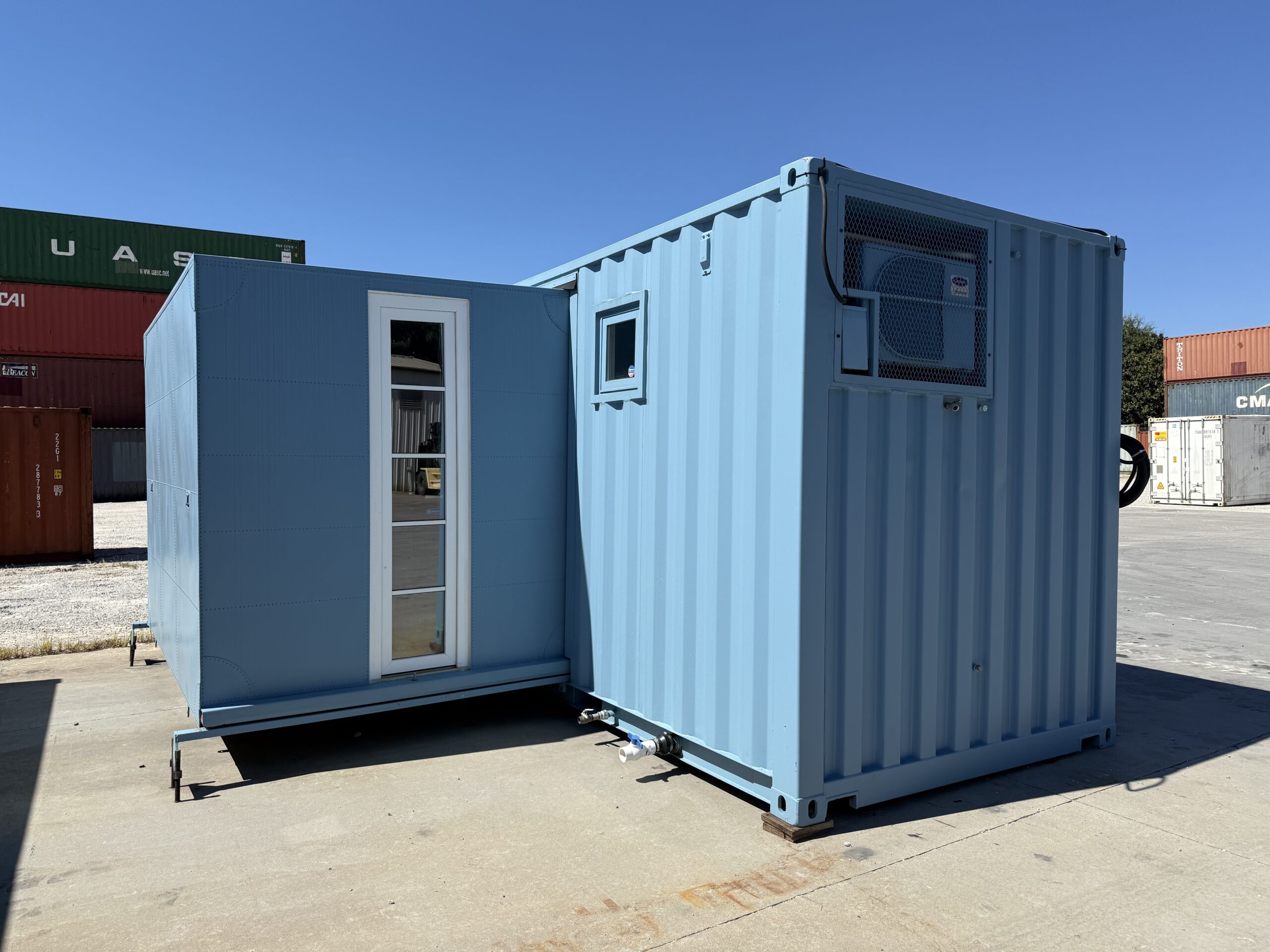
From Standard Storage to Custom Builds: What Goes Into a Container Conversion?


A shipping container is a strong starting point, but for many businesses, an empty steel box isn’t the finish line. A dealership needs a ventilated space to stage EV batteries, a nonprofit needs a branded drop point, or a jobsite might need an office with air conditioning. Shipping container conversions close the gap between what a standard unit offers and what your operation actually requires.
At Container Technology, we’ve built custom shipping containers and provided a variety of container modifications for businesses since 1988, with more than 100 years of combined industry experience on our team. This guide walks through what goes into a conversion: defining the job, choosing the base container, planning the modifications, and completing the build at our Morrow, Georgia shop. Along the way, we’ll show you real conversions we’ve completed.
What is a shipping container conversion? A shipping container conversion is the process of modifying a standard storage or shipping container to meet a specific business need. Depending on the application, modifications may include additional doors, windows, insulation, electrical wiring, lighting, HVAC, shelving, partitions, and custom interior or exterior finishes. The process begins by defining the container’s intended use and selecting the right base unit, followed by fabrication and installation of the required features.
What Is a Shipping Container Conversion?
Not every modified container is a full build-out, so it helps to think in three tiers.
- Standard storage container: Secure, enclosed storage with the original cargo doors and a basic interior.
- Modified storage container: A standard unit with selected upgrades, such as an added door, shelving, lighting, or a better locking system, to improve access, organization, or security.
- Custom container conversion: A more extensive build-out for a specific purpose, such as a mobile office, workshop, guard shack, equipment room, or specialized processing unit.
Many projects sit in the middle. Some customers only need an extra personnel door and shelving. Others need a finished, climate-controlled interior with multiple systems working together. The right scope depends entirely on what the container needs to do.
Step 1: Determine What the Container Needs to Do
Every good conversion starts with the end use. The intended use determines the container’s size, access points, insulation, electrical features, and interior layout, so it should guide every design decision that follows.
Identify the Container’s Primary Function
Common commercial applications include:
- Equipment and tool storage: Added entry points, shelving, lighting, and reinforced locking options.
- Mobile offices and workspaces: Personnel doors, windows, insulation, outlets, lighting, and HVAC.
- Temperature-controlled storage: Insulation, interior finishes, and heating or cooling systems.
- Workshops: Workbenches, shelving, electrical access, and durable flooring.
- Guard shacks: Personnel doors, visibility windows, security bars, and a finished interior.
- Equipment rooms and labs: Partitions, power, climate control, and access designed around the equipment.
Consider How Your Team Will Use the Space
A few practical questions shape the design early:
- How many people will use the container, and will they come and go throughout the day?
- Does equipment need to be moved in and out?
- Will the space hold temperature-sensitive materials?
- Does it need lighting, power, data connections, or ventilation?
- Will it stay in one place, or will you need to relocate it?
For one of our recent dealership projects, the answers were clear: staff needed to move heavy battery packs in and out several times a day, and the space needed airflow. That led directly to the build we describe below.
Step 2: Select the Right Shipping Container for the Conversion
The base container matters before any cutting begins. A well-matched starting unit saves time and produces a better result.
Choosing the Right Container Size
- 10ft containers suit compact workspaces, guard shacks, and small storage applications.
- 20ft containers handle many commercial storage and workspace conversions.
- 40ft containers fit larger equipment rooms, workshops, and labs.
- High cube containers add interior height, which helps with equipment clearance and ductwork.
The right size depends on your equipment, layout, access needs, and the space available where the unit will sit. Container length isn’t fixed, either. We’ve cut a 40ft high cube down to 30ft for a retail clothing store’s on-site storage, and shortened another to 28ft for a modular garage.
New vs. Used Containers for Custom Projects
New containers aren’t always necessary. What matters is the condition of the unit and the scope of the work. We look at the floor and wall condition, corrosion, previous repairs, expected service life, and appearance. A heavily modified build with a finished interior may justify a cleaner starting unit, while a utility conversion may work well with a solid used container. (Note that 10ft containers are typically only available new or “one trip,” since they rarely come out of shipping service.)
When a Specialized Container Is the Better Starting Point
Sometimes a standard box isn’t the best base. Open side containers make a natural foundation for equipment testing labs, since the wide opening allows full access. Non-working refrigerated containers already have insulated walls, which makes them a strong starting point for research labs and climate-controlled storage. Our cold storage lineup covers true refrigerated units for applications that need active cooling.
Step 3: Plan the Custom Modifications
This is where the build takes shape. Each modification solves a specific problem, and they work best when planned together.
Doors and Access Points
Entry doors change how people and equipment move through the space. Personnel doors suit offices and guard shacks. Roll-up doors suit frequent loading. Double-door setups give access from both ends. Placement matters, because a door’s location affects the interior layout. We also offer locking mechanisms such as deadbolts and lock boxes for added security.
Windows and Skylights
Windows and skylights bring in natural light for offices and give guard shack personnel the visibility they need. Placement should follow desk locations, work areas, and equipment, and security bars can be added where appropriate.
Insulation and Interior Finishing
A standard container isn’t designed as a finished, occupied workspace. Insulation and interior finishing manage heat, cold, moisture, and condensation. Options include fiberglass, rigid foam, closed-cell spray foam, and interior wall panels. The right choice depends on the container’s purpose and the climate system being installed.
Electrical Wiring and Lighting
Electrical and lighting work can include interior and exterior lights, outlets, panels, dedicated circuits, data connections, and exterior power connection points. The design should match the equipment and the power available at your site, and electrical work should be completed and inspected by qualified professionals.
HVAC, Ventilation, and Temperature Control
HVAC options range from window units to mini-splits to through-wall systems, depending on the space. It helps to distinguish between an insulated, air-conditioned workspace and a true refrigerated container built for active temperature-controlled storage. Not every conversion needs cooling, either: some, like our battery storage units, rely on ventilation instead.
Shelving, Flooring, and Interior Systems
Shelving, workbenches, racks, partitions, and flooring upgrades should be planned around the size, weight, and placement of what you’ll store or use. Floor overlays in steel, vinyl, or aluminum diamond tread add durability over the original wood floor.
Exterior Finishes and Security
Custom paint can match your brand colors, protect the exterior, and help people identify the unit’s purpose at a glance. Combined with added locks, it finishes the unit for the environment where it will work.
Step 4: Fabrication and Installation at Our Morrow Shop
Container Technology performs modifications at our Morrow, Georgia facility, which includes a dedicated shop area. Your project is handled by our own personnel rather than coordinated through outside vendors, which keeps quality control, communication, and scheduling in one place. A typical build moves through these stages:
- Reviewing specifications: Confirming dimensions, modifications, equipment requirements, and intended use.
- Preparing the container: Inspecting the unit and preparing the areas where work will happen.
- Cutting and fabricating openings: Creating openings for doors, windows, vents, and HVAC components.
- Installing structural and interior components: Framing, partitions, insulation, flooring, and wall finishes.
- Completing electrical and mechanical features: Wiring, lighting, outlets, and HVAC equipment.
- Finishing the unit: Paint, hardware, shelving, and other requested features.
- Reviewing the completed conversion: Checking the finished unit against the agreed specifications.
When the build is complete, we can arrange delivery. Because the corner castings on a modified container still accommodate standard flatbed transport and forklift or crane placement, getting it to your site is straightforward. Beyond a level surface, most units need no special site preparation.

What Does a Custom Container Conversion Look Like? Real Examples from Container Technology
Descriptions only go so far. Below are conversions we’ve completed, along with the thinking behind each one. You can browse more on our custom container conversions page.
EV Battery Storage Units for Dealerships
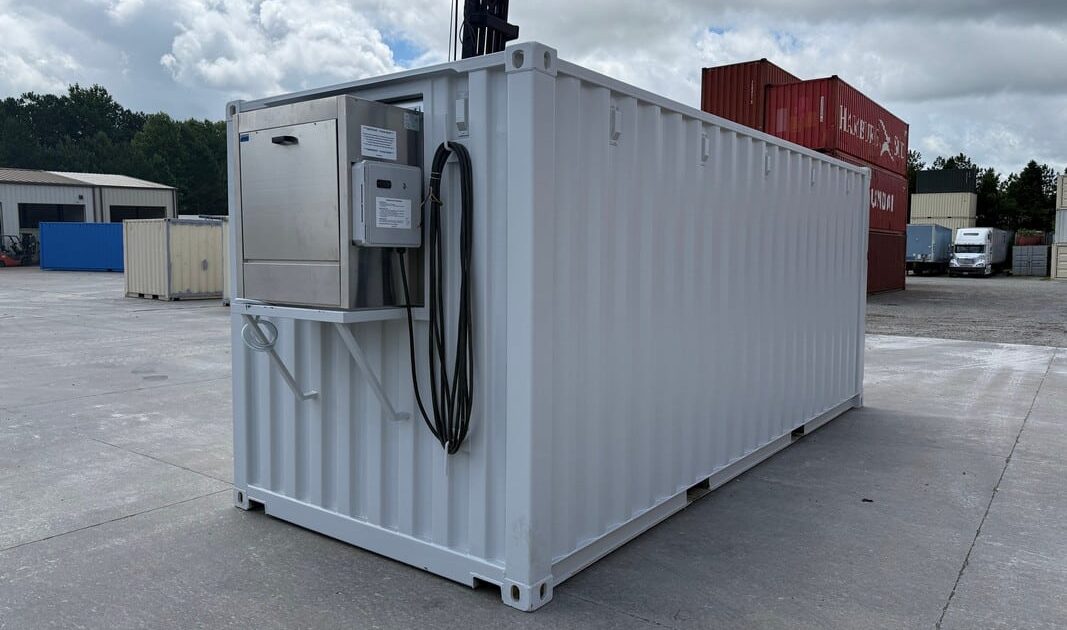
Electric vehicles are changing what dealerships need to store, and damaged or retired lithium-ion battery packs need to stay separated from showrooms and service bays. We converted 20ft high cube containers into dedicated battery storage units for automotive companies. Each unit has a large 16ft chain hoist roll-up door on one end for moving packs and pallets, plus multiple fixed louvre vents to keep air moving. Closed-cell spray foam insulation steadies interior temperatures through Georgia summers and winter cold snaps, and the original cargo doors on the opposite end remain as a second access point.
Mobile Donation Kiosk
A clothing donation organization was juggling multiple bins that overflowed, needed frequent servicing, and looked poor in shopping center lots. We built a single high-capacity kiosk from a 20ft container. The conversion included multiple hinged drop-door slots on the sidewall, sized for clothing donations, and angled interior chutes welded inside to guide items downward and toward the rear. We kept the rear swing doors for servicing, added a small access panel, installed a dark metal fascia panel for logo signage, and painted the exterior in the client’s cobalt blue. After fabrication in Georgia, the unit was delivered by flatbed to the Northeast.
10ft Temperature-Controlled Mobile Workshop
A standard 10ft container became a compact, climate-controlled workshop. We installed a personnel door at the end opposite the original double doors, then added electrical throughout, including a light, outlets, and a small window AC unit. At the customer’s request, we also added a steel overlay on the floor. Those details turned a small storage box into a workspace someone can comfortably use year-round. Features such as shelving and a custom workbench can be built into a unit like this one.
10ft Temperature-Controlled Guard Shack
For security personnel, visibility, comfort, and power matter most. This 10ft conversion includes a personnel door, windows with security bars, a finished interior, lights, outlets, and a mini split HVAC system. A vinyl overlay covers the existing wood floor, and the exterior is painted gray.
20ft Mobile Office
Job sites and operations often need a real workspace that can move. That’s where mobile offices come in. A 20ft container works well for this: a personnel entry door, windows, a finished interior, lighting, outlets, and HVAC give crews a space to plan, review documents, and take calls. We’ve built these for jobsites as well as for large-scale applications, including a climate-controlled 53ft high cube office for a military base.
Temperature-Controlled Equipment Room
One of our more specialized projects converted a 20ft high cube container into a mobile control and equipment room. We installed two personnel doors on one side of the container and a partition inside with a passage door, then made the space temperature-controlled. The layout was designed around the customer’s equipment and how their team needed to get in and out.
More Builds That Show the Range
Conversions go well beyond offices. We’ve built a mobile air compressor module with two 7ft roll-up doors, four large louvered vents, and a large exhaust fan. We’ve converted open-side containers into equipment testing labs, one insulated with rock wool and lined with stainless steel panels. A mobile trade show display has a sidewall with an electric winch that folds down to extend the floor space. We’ve also turned non-working refrigerated containers into research labs, from a bio-secure amphibian lab to a controlled incubation space for a mycelium treatment process. Each started with a different need, and each ended up with a different container.
How Much Does a Shipping Container Conversion Cost?
Pricing depends on the project, so we don’t publish flat rates. The main factors are:
- Original container size and condition
- Number and type of doors and windows
- Insulation and interior finishing requirements
- Electrical and HVAC specifications
- Shelving, workbenches, partitions, and flooring
- Exterior paint and finishing
- Overall complexity of the fabrication
A customized unit costs more than a standard one, but it often replaces recurring costs, such as the extra servicing trips that multiple donation bins require, or the months-long timeline and expense of a permanent building. The best way to get an accurate number is to define your scope first, then request a quote based on your actual requirements.
What Should You Consider Before Ordering a Custom Container?
Use this checklist to prepare:
- Intended use and expected occupants
- Container dimensions and interior layout
- Equipment dimensions and weight
- Door placement and access requirements
- Electrical service available at the site
- Heating, cooling, insulation, and ventilation needs
- Delivery access and placement location
- Local building, zoning, fire, and electrical requirements
A modified container isn’t automatically exempt from local permitting or building rules. Zoning and requirements vary by municipality, so the property owner or project manager should confirm what applies with the relevant jurisdiction before placement.
Custom Shipping Container Modifications from Container Technology
Container Technology has been in business since 1988, and our team brings more than 100 years of combined industry experience to each project. We handle everything from basic storage modifications to involved custom conversions, with in-house fabrication at our Morrow, Georgia facility. We serve businesses throughout the Atlanta metro and the broader Southeast, and we’ve delivered finished units well beyond the region.
If you need more than a standard container, we’re glad to talk through your operational requirements and what a conversion could look like for you. Contact Container Technology to discuss your project, explore customization options, and request a quote, or call 866-692-8034.
Frequently Asked Questions
What is a shipping container conversion?
It’s the process of modifying a standard container to meet a specific business need, using features such as doors, windows, insulation, electrical, HVAC, and custom finishes.
What modifications can be made to a shipping container?
Common modifications include entry doors, roll-up doors, windows, insulation, electrical and lighting, HVAC, shelving, partitions, flooring overlays, custom paint, and added locks. Specialized builds can include vents, exhaust fans, chutes, and drop slots.
Can a standard shipping container be converted into an office?
Yes. A typical office conversion includes a personnel door, windows, a finished and insulated interior, outlets, lighting, and HVAC. We offer mobile offices in several sizes.
Can you add doors and windows to a shipping container?
Yes. We cut and fabricate openings for personnel doors, roll-up doors, and windows, with placement planned around your layout and workflow.
Can a shipping container be insulated and air-conditioned?
Yes. Insulation options include spray foam and rigid foam, and cooling options include window units, mini-splits, and through-wall systems. For active refrigeration, see our cold storage containers.
Can electrical outlets and lighting be installed in a shipping container?
Yes. We install lighting, outlets, and related electrical components, designed around your equipment and the power available at your site.
Can a shipping container be converted into a workshop?
Yes. Workshop conversions typically include a personnel door, electrical, climate control, and durable flooring, plus shelving and workbenches if needed.
How much does it cost to convert a shipping container?
Cost depends on container size, the number and complexity of the modifications, and finishes. Request a project-specific quote for accurate pricing.
How long does a shipping container conversion take?
Timelines vary by project complexity. Contact us with your scope for a timing estimate.
Can a used shipping container be modified?
Yes, depending on its condition. We evaluate the floor, walls, and any corrosion or prior repairs to make sure it suits the planned work.
Can a shipping container be cut down or resized for a custom application?
Yes. We’ve cut 40ft high cube containers down to 30ft and 28ft for specific projects, and we’ve also cut a container in half horizontally for stacking on-site.
Where can I get a shipping container modified in Georgia?
Container Technology performs modifications at our Morrow, Georgia facility, serving the Atlanta metro and the Southeast. Request a quote to get started.