
EV Battery Storage: Why Atlanta Dealerships Are Turning to Converted Shipping Containers


Electric vehicle sales continue to climb across metro Atlanta, and dealerships are running into a challenge they didn’t experience a decade ago: where do you store the batteries? Whether it’s inventory awaiting installation, retired packs pulled during service, or damaged units flagged for disposal, EV batteries require a different storage approach from anything a traditional service bay or parts room is equipped to handle.
Container Technology has spent the past several years converting 20’ shipping containers into dedicated EV battery storage units for dealerships throughout the Atlanta area. This guide breaks down why segregated battery storage matters, what a properly modified container includes, and how dealerships are putting these units to work on their lots.
Wondering what Container Tech can do for your EV battery storage needs? Contact us today to discuss container modification options.
Why EV Batteries Need Separate Storage
Lithium-ion battery packs behave differently than the parts and fluids dealerships have historically stored over the years. Damaged, defective, or aging packs hold the potential for thermal runaway, a process where an internal short or physical damage causes the battery to heat rapidly and, in rare cases, ignite. Because of that risk, many insurers, fire marshals, and manufacturer guidelines now recommend or require keeping EV batteries away from primary buildings, service bays, and areas with heavy foot traffic.
For a dealership, that creates a significant logistical problem. Service departments need somewhere to stage batteries pulled during diagnostics or replacement work. Sales departments need to hold an inventory of batteries before installation. Plus, every dealership eventually accumulates a handful of packs waiting on manufacturer pickup or third-party recycling. Building a dedicated structure for this purpose is expensive and slow, as construction timelines can stretch across months and quickly rack up a large bill. In contrast, a converted shipping container solves the same problem in a fraction of the time and at a fraction of the cost, all while keeping batteries physically separated from the showroom, the parts department, and the technicians working nearby.
How a Converted Container Handles Battery Storage
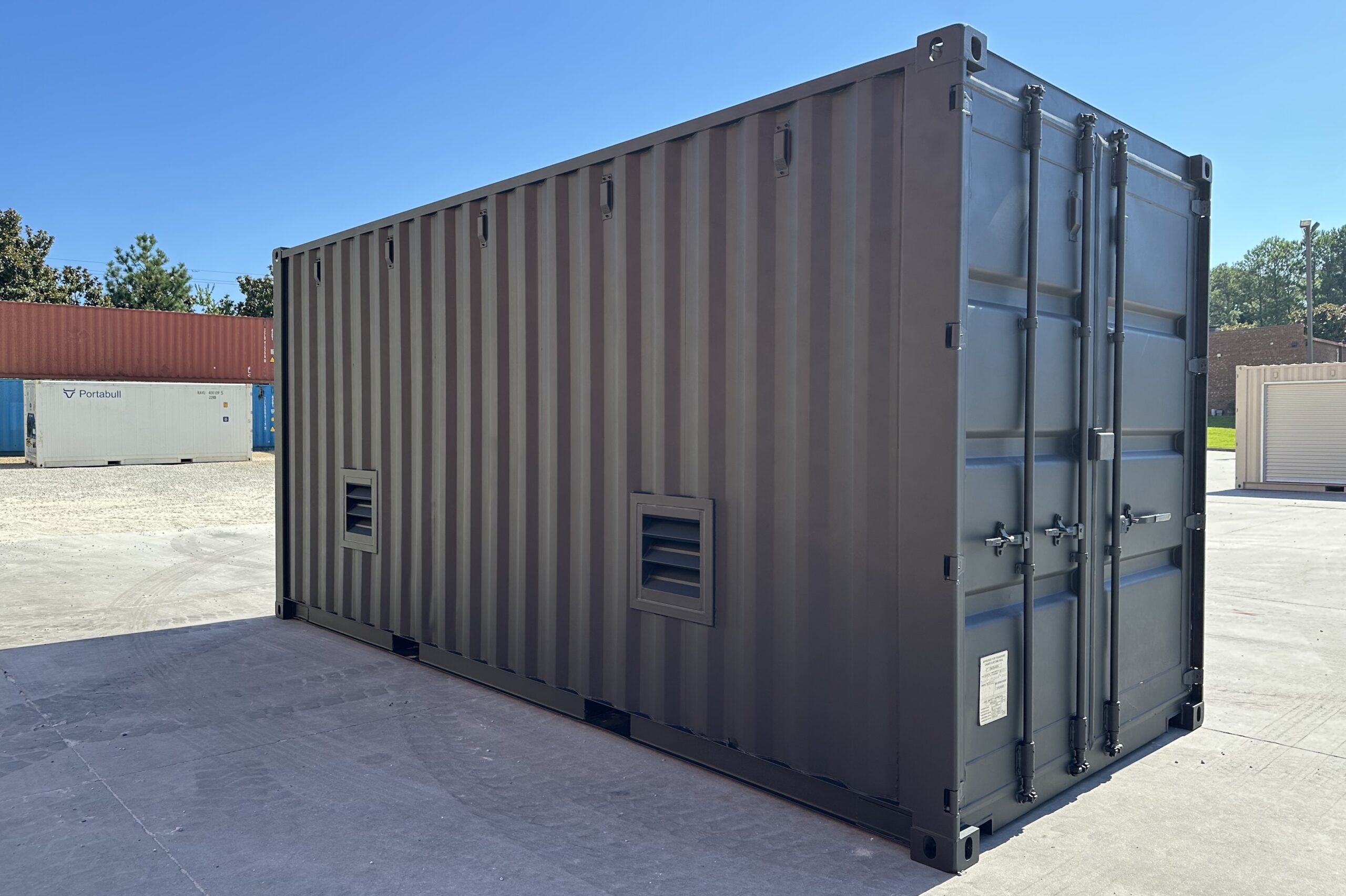
Container Technology has worked with dealerships to modify 20-foot containers into carefully tailored EV battery storage units. Each conversion is built around a handful of core features that address the specific demands of storing batteries on an active dealership lot.
Wide Access for Loading and Unloading
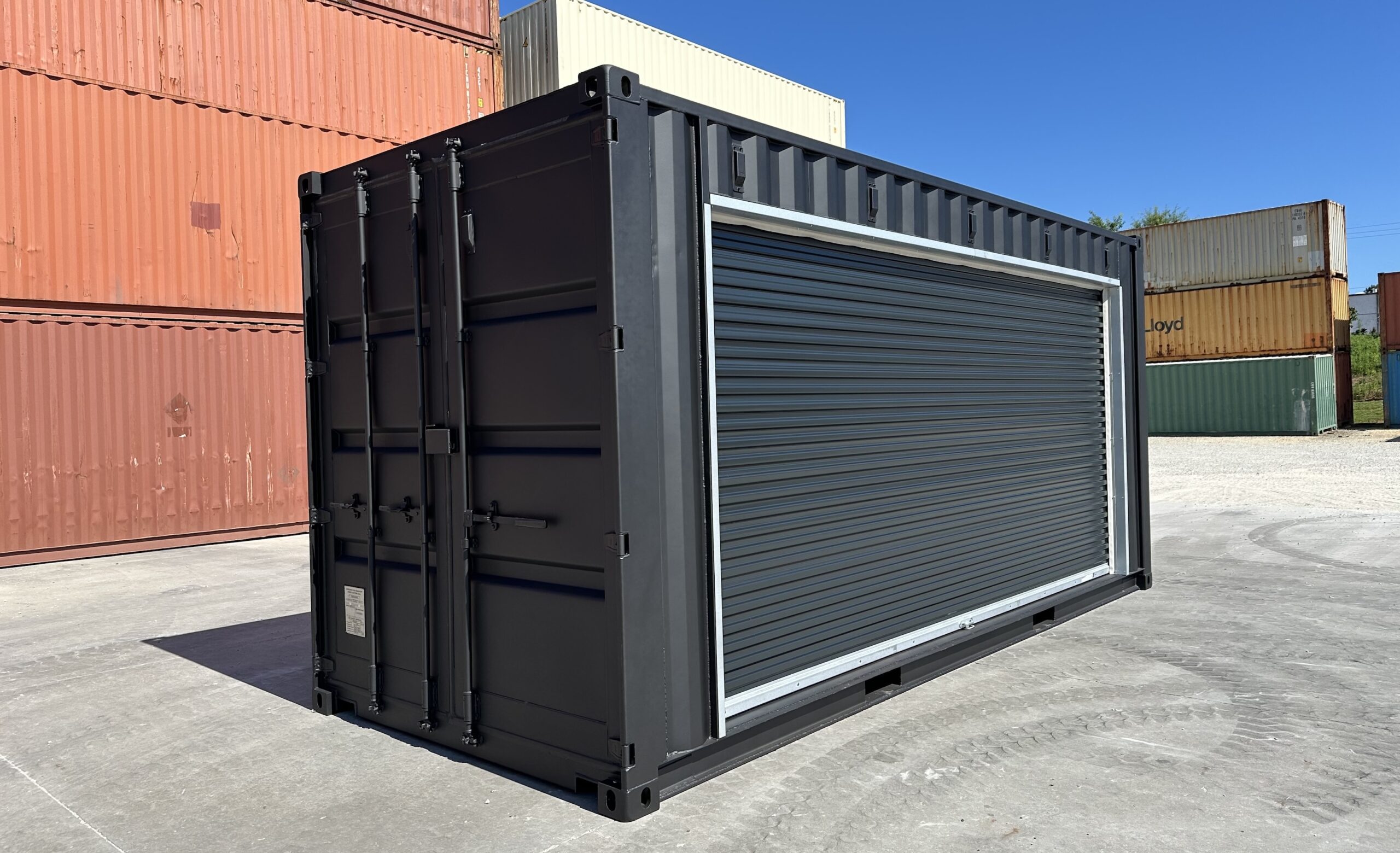
A heavy-duty roll-up door is installed on one end of the unit, providing a wide opening for service staff moving batteries, pallets, and equipment in and out. Battery packs are heavy and often awkward to maneuver, so a full-width opening is even more of a practical addition here than for general storage. Technicians can back a cart or forklift right up to the opening rather than working around a narrow standard door.
Airflow and Moisture Control
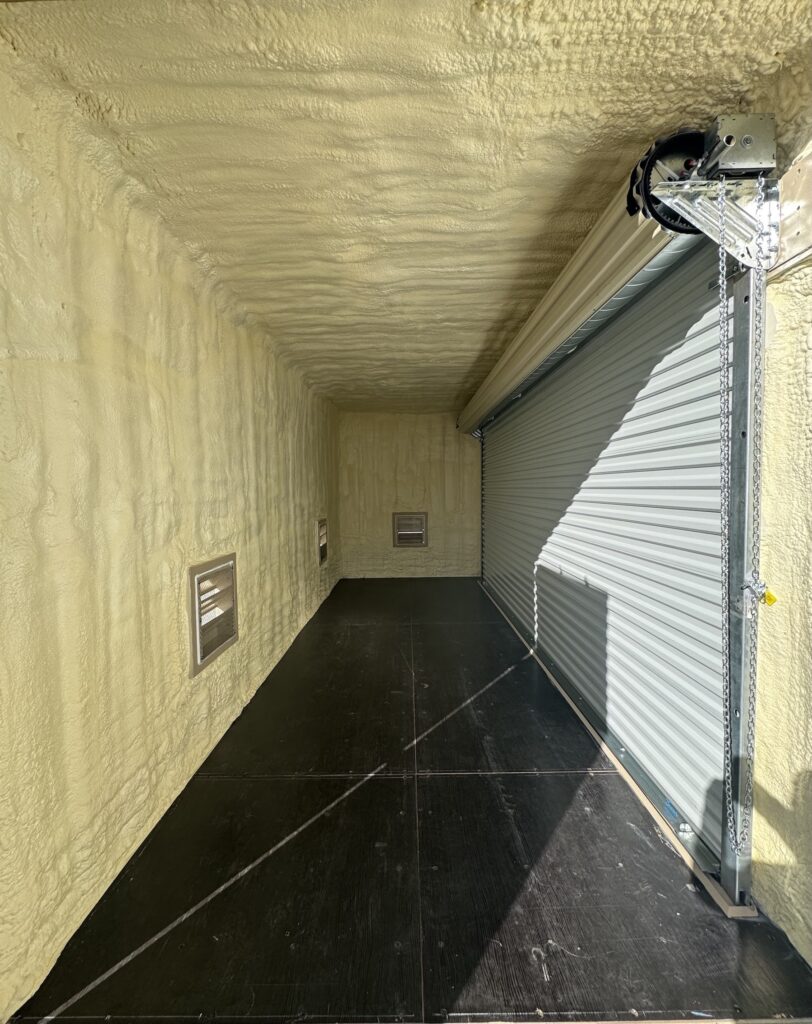
Multiple wall vents are built into the container to support continuous airflow through the interior. Batteries generate some heat even at rest, and humidity buildup inside a sealed steel box can accelerate corrosion on terminals and connectors. The venting keeps air moving through the space so heat and moisture don’t collect, which is an important consideration both for the batteries themselves and for anyone working inside the unit.
Insulation That Stabilizes Interior Temperature
Closed-cell spray foam insulation lines the interior walls and ceiling. Georgia summers push interior temperatures inside an uninsulated steel container well past the ideal range for battery storage, and winter cold snaps introduce the opposite problem. The spray foam smooths out those swings, keeping the interior more stable and further limiting the condensation that can form when temperatures shift quickly. The closed-cell product is specifically chosen because it resists moisture absorption better than open-cell alternatives, which is a crucial consideration for reducing humidity.
Steel Construction Built for the Job
The container itself is still built from the same heavy-gauge, corrosion-resistant steel used across our standard inventory. That construction gives dealerships a secure, weather-resistant enclosure without the need to build anything from scratch. The steel shell also adds a layer of physical security and fire containment that a wood-frame shed or fabric structure can’t match.
A Second Access Point
Unlike a fully converted office or workspace, these battery storage units keep the original cargo doors on the opposite end intact. That gives staff a second entry point, which is useful for staging batteries in an organized sequence, for ventilation during loading, or for flexibility when the roll-up door end is blocked by a delivery truck or service vehicle.
Ground-Level Placement
Because the units sit at ground level, users can position them close to production areas, service bays, or staging zones without ramps, lifts, or special site work. That proximity allows technicians to easily move batteries multiple times a day between the service bay and the storage unit.
Customizable Interior Layout
The interior can be configured with battery racks and shelving systems to keep inventory organized by model, condition, or destination. Rather than stacking packs on the floor, dealerships can set up a layout that makes it easy to track which batteries are awaiting service, which are ready for pickup, and which need to be flagged for recycling.
Portability When Needs Change
Because the unit is still a shipping container at its core, it retains full portability. If a dealership expands its service department, relocates staging areas, or opens a second location, the unit can move with the business rather than remaining fixed in a permanent spot.
Together, these features create a container that does one job well: keeping EV batteries contained, ventilated, temperature-stabilized, and physically separated from the rest of the dealership without requiring new construction or a long buildout timeline.
Best Practices for Storing EV Batteries On-Site
Having the right container is only one aspect of proper EV battery storage. How a dealership organizes and manages the space day-to-day makes a real difference in safety and efficiency. Here are a few practices worth building into your process:
- Separate by condition, not just by model: Rather than grouping batteries only by vehicle type, keep damaged, defective, or flagged packs physically separated from healthy inventory batteries awaiting installation. This makes it easier to spot which units need special handling and reduces the chance of a compromised pack being mistaken for one that’s ready to use.
- Inspect before storing, not after: Batteries should be visually checked for swelling, damage, or leaks before they’re moved into the unit, rather than after they’re already inside. Catching an issue at the point of intake keeps compromised packs from sitting unmonitored next to the rest of your inventory.
- Label everything clearly: With a customized layout of racks and shelving, it’s worth tagging each battery or pallet with intake date, condition, and destination, whether that’s service, resale, or recycling pickup. A quick visual system prevents technicians from digging through the unit to find what they need.
- Keep aisles clear for the roll-up door and cargo doors: Since the unit offers two points of access, arrange racks so both doors stay usable. This keeps loading and unloading efficient and ensures staff always have a clear path in and out, especially if a battery needs to be removed quickly.
- Monitor airflow paths: Wall vents only work as intended if they’re not blocked by racking, pallets, or stacked inventory. Leave clearance around vent locations so air keeps moving through the space as designed.
- Set a routine for outbound pickups: Batteries flagged for manufacturer return or third-party recycling shouldn’t sit indefinitely. Establishing a regular pickup schedule keeps the unit from becoming a long-term holding area and frees up space for new inventory.
- Restrict access to trained staff: Because of the risks associated with damaged battery packs, it’s worth limiting who has keys or access to the unit. Pairing this with additional locking mechanisms gives dealerships an added layer of control over who’s handling battery inventory.
- Revisit capacity as EV volume grows: What works for a dealership’s current service volume may not hold up as EV sales and trade-ins increase. Checking in periodically on how full the unit runs helps determine whether it’s time to reorganize the layout or add a second container rather than overcrowding the existing one.
Following these steps helps to keep EV batteries contained, monitored, and safely separated from the rest of the operation.
Why Dealerships Choose a Container Over a Permanent Structure
The alternative to a converted container is usually a permanent structure, which presents some real drawbacks for a dealership trying to move quickly. A permanent addition requires architectural planning, permitting, and a construction timeline that can take months to complete. By comparison, a container typically does not require a permit and can be converted/delivered more quickly than a permanent structure can be erected.
Cost-Effectiveness
Cost is the other major factor. Dealerships operate on tight margins around facility spending, and a battery storage container costs a fraction of what a new structure would run once labor, materials, and site work are factored in. Because the container is also portable, it doesn’t represent a sunk cost tied to one location. If a franchise changes its footprint or a service department is restructured, the unit can move with it.
Compliance
The compliance angle stands as another noteworthy aspect of using containers for EV batteries. Many manufacturer certification programs and local fire codes are still catching up to the realities of EV service work, and requirements can vary by jurisdiction across the greater Atlanta area. A well-ventilated, insulated container gives dealerships a defensible answer when insurers or inspectors ask how battery storage is being handled, without needing to wait on a capital construction project to get there. This makes the audit process much easier as well.
Built for Dealership Service and Sales Operations
These units aren’t limited to service departments. Sales teams handling EV trade-ins, pre-delivery inventory, or manufacturer-supplied packs awaiting installation benefit from having a dedicated, secure space that’s separate from customer-facing areas. Parts departments use the same containers to stage warranty returns before manufacturer pickup. For dealerships running larger EV service volumes, a second or third unit can be added to the lot as demand grows, since each container functions independently.
Additional Security and Customization Options
Beyond the core battery storage features, Container Technology offers additional locking mechanisms and lock boxes for dealerships that want an extra layer of access control, particularly for units storing high-value inventory batteries. Exterior branding and signage can also be added, which helps staff and delivery drivers quickly identify the unit’s purpose on a busy lot.
Serving Dealerships Across the Atlanta Metro: Contact Us
Container Technology has supplied and modified storage containers for businesses throughout the greater Atlanta area since 1988. Our team has worked directly with dealership service managers and facilities staff to build EV battery storage units that meet the practical realities of a working lot. We understand the fast pace at dealerships, and we build our conversion timelines around getting a functional unit on-site quickly.
If your dealership is evaluating how to handle EV battery storage, whether it’s for service department overflow, sales inventory, or warranty returns, our team can walk through container size, layout, and modification options based on your specific service volume and site constraints. Request a free quote online or call us to talk through what a converted unit would look like for your location.
Frequently Asked Questions
Why can’t EV batteries be stored inside the main dealership building?
Lithium-ion battery packs carry a risk of thermal runaway when damaged or defective, and many insurers, manufacturers, and local fire codes recommend or require that batteries be kept separate from primary buildings and high-traffic work areas. A dedicated, ventilated storage unit keeps that risk contained away from staff, customers, and inventory.
What size container is typically used for EV battery storage?
Most of the dealership conversions Container Technology has completed use 20-foot containers, which offer enough capacity for a meaningful number of battery packs while still fitting into a dealership lot without requiring excessive space. Dealerships with higher volume can add a second unit rather than sizing up.
Does the container require a special foundation or site prep?
No. These units sit at ground level and can typically be placed on a compacted gravel pad or level surface near the service or staging area. That’s one of the main advantages over a permanent structure, which would require excavation, footings, and a longer site preparation process.
How does the insulation help if the container has vents for airflow?
The two work together rather than against each other. The wall vents keep air circulating to prevent heat and moisture from becoming trapped, while the closed-cell spray foam insulation slows how quickly outside temperature swings transfer into the interior. The result is a space that stays more stable, with airflow that still prevents stagnant conditions.
Can the container be moved once it’s placed on the lot?
Yes. Even with the modifications in place, the unit remains a standard shipping container structurally and can be relocated by truck if a dealership changes its layout, expands its service department, or needs the unit at a different location.