Shipping Container Terminology: 50 Terms Every Buyer Should Know


You’re requesting information ahead of your first shipping container purchase, and suddenly, the sales rep on the phone starts talking about “one-trip units,” “CSC plates,” and “wind and watertight.” These words might effectively mean nothing to you. However, this vocabulary originates from international shipping and carries over into the storage world too.
Knowing the terms makes the buying process faster and prevents you from paying for something you didn’t intend to buy. This guide covers 50 terms in six groups: size, type, condition, structure, modifications, and delivery.
Whether you run a construction firm off I-75, manage a distribution center near Hartsfield-Jackson, or need overflow space for a retail operation, these are the words that will come up. When you’re ready to compare options, Container Technology can help you match each term to a real unit.
Size and Capacity Terms
Most buyers start their shopping journey here. Coincidentally, the most jargon tends to show up, too.
TEU stands for twenty-foot equivalent unit, indicating the shipping capacity. A 20-foot container equals one TEU. FEU means forty-foot equivalent unit, which equals two TEUs. You’ll see both in shipping data, though most storage buyers simply ask for a 20-foot or 40-foot unit.
A standard container is 8 feet wide and 8 feet 6 inches tall on the outside, available in 10-foot, 20-foot, and 40-foot lengths.
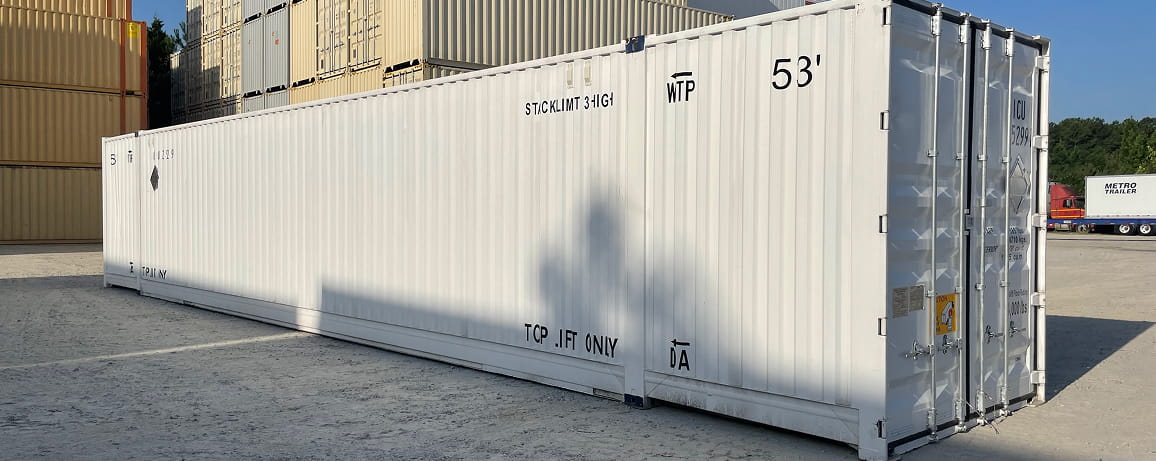
A high cube container adds a foot of height, bringing the total to 9 feet 6 inches. That extra clearance helps if you plan to install shelving, store tall equipment, or convert the unit into a workspace. High cubes come in 40-foot, 45-foot, and 53-foot lengths.
External dimensions describe the outside of the box. These numbers aid with site planning, because they tell you how much ground the unit will cover.
Internal dimensions describe the usable space, which runs slightly smaller because of the floor, roof, and wall thickness. The difference is usually about 7 or 8 inches in height. If you’re fitting pallets or racks inside, always plan around the interior numbers.
Cubic capacity is the total interior volume, typically given in cubic feet. Capacity can help when comparing a standard unit against a high cube.
Payload is the maximum weight of cargo the container can carry.
Tare weight is the weight of the empty container itself. Gross weight is the combined total of the container plus its contents. Tare weight affects what kind of truck and equipment your delivery requires.
Container Type Terms
Once you’ve settled on a size, the next question is the style of container. The industry uses several names for different container types and configurations.
A dry container, sometimes called a general-purpose container, is the standard sealed unit used for ordinary storage and freight. It does not feature climate control or special openings, and users most commonly choose it for tools, inventory, and equipment.
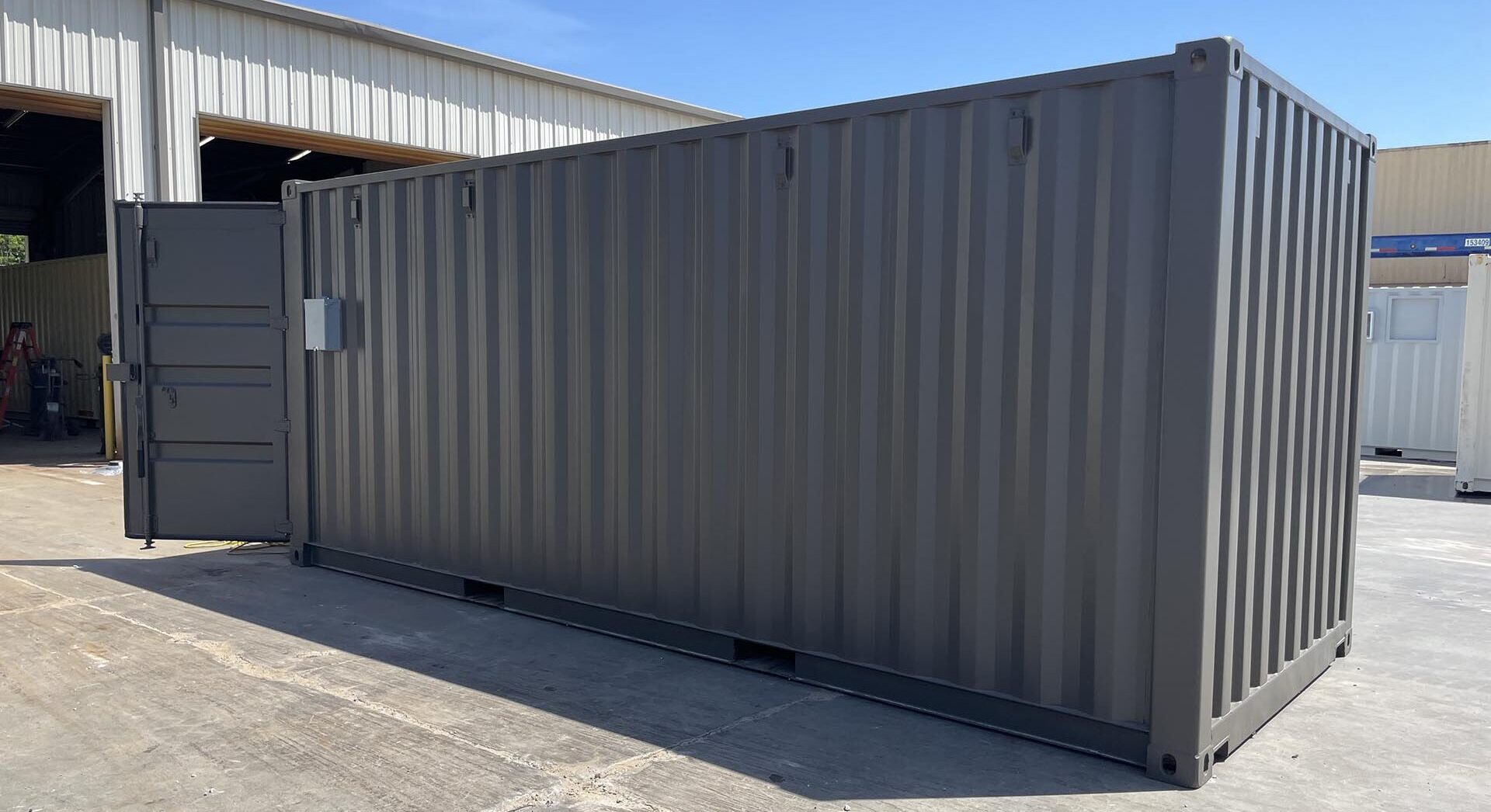
An open side container has full-length doors on one long wall in addition to the standard end doors. Forklifts can reach inside easily, which makes these popular for retail pop-ups, events, and job sites. Open side units also work as display areas.
A double door container, also called a tunnel container, has doors on both ends so crews can load from one side and unload from the other. Double door containers suit staging and sorting work.
A reefer is a refrigerated container with a built-in cooling unit, used for food, beverages, floral products, and pharmaceuticals. Cold storage units hold a set temperature range.
An insulated container has interior insulation but no powered refrigeration, which helps buffer heat and cold for items that aren’t highly temperature sensitive.
An open-top container has a removable roof panel or tarp, which allows loading from above with a crane. Businesses typically use these units for oversized or tall cargo.
A flat rack has collapsible ends and no walls, designed for machinery and heavy loads that won’t fit through a door. Most commercial storage buyers won’t need either one, but the terms come up in quotes and shipping discussions.
A mobile office is a container converted into a finished workspace with windows, lighting, climate control, and sometimes plumbing. Construction firms often place mobile offices directly on the job site.
Condition and Grade Terms
Condition terms typically affect your budget the most, so you’ll benefit from learning these definitions.
A one-trip container has made a single voyage from the factory, typically carrying cargo from overseas to a U.S. port. It arrives in near-new condition and has the longest remaining lifespan. One-trip containers offer the most benefit if appearance or maximum durability is a priority.
A used container has been in service for several years or more. It costs less and works well for plain storage, though it may show dents, scratches, or faded paint.
Wind and watertight, often shortened to WWT, means the container has no holes, the doors seal, and the interior stays dry. It’s the baseline standard for storage use.
Cargo-worthy has stricter terms, as it denotes that the unit is certified to carry freight on a vessel, which requires a structural inspection. Many storage buyers don’t need cargo-worthy certification, but if you plan to ship goods in the container, this verification is a must.
As-is means the seller offers the container in its current condition without repairs. Always confirm what “as-is” covers before you agree to it.
IICL refers to the Institute of International Container Lessors, an industry group whose inspection standards some sellers use to grade used units. A container rated to IICL standards has been checked for structural soundness and repair quality.
Corten steel, a weathering steel sometimes written COR-TEN, is what most containers are made from. It forms a thin protective layer of oxidation that slows deeper corrosion.
Surface rust commonly affects used units, appearing as light orange discoloration. Surface rust is cosmetic and normal, and it can be sanded and repainted. Deep rust that has eaten through the metal is a larger issue.
Structural and Component Terms
When you inspect a container, whether in person or through photos, knowing these terms can allow you to understand the make of the unit.
Corrugated steel panels form the container’s walls and roof. The ridges add rigidity, allowing containers to stack many units high.
Corner castings are the reinforced steel blocks at each of the eight corners. Cranes, twist locks, and chains attach to them, so they’re the strongest points on the box. Check them for cracks or heavy damage, since a compromised corner casting can create problems during lifting.
The floor is usually marine-grade plywood laid over steel cross members. It’s built to carry heavy loads, including forklift traffic. Look for soft spots or water stains when inspecting a used unit.
Cargo doors are the large double doors at the end of the container.
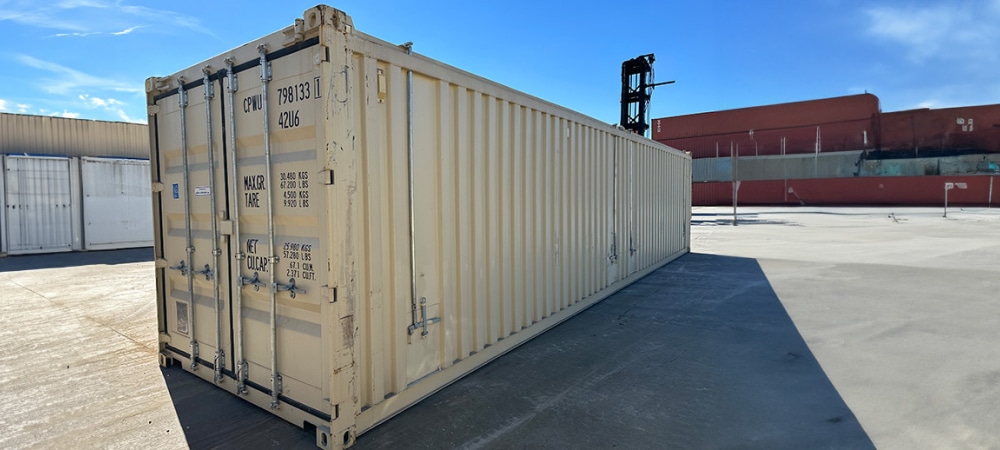
Locking rods hold the cargo doors shut. They are vertical steel bars that rotate into the frame at the top and bottom. The rods and their handles are the container’s primary security hardware, and they’re also where you’ll attach padlocks or lockboxes.
Door gaskets are the rubber seals around the door frame. Cracked or missing gaskets commonly cause leaks.
Forklift pockets are slots cut into the bottom side rails of 20-foot containers, allowing a forklift to lift and move an empty unit. Most 40-foot containers don’t have them.
A CSC plate is the safety approval plate attached to the door. CSC refers to the International Convention for Safe Containers, and the plate lists the manufacture date, weight ratings, and stacking limits.
Ventilation openings are small louvered vents near the roofline that allow minimal airflow and limit condensation.
Modification Terms
Many commercial buyers want more than an empty box, and modifications allow a container to become a working space. Container Technology handles these customizations in-house.
A roll-up door replaces or supplements the standard doors and opens upward like a garage door, which saves swing space in tight yards.
A personnel door is a standard walk-in door cut into the container wall or end, common on offices and workshops. Both options fall under entry door modifications.
Insulation keeps interior temperatures stable and reduces condensation. Closed-cell spray foam and rigid panels are common choices, and they’re often paired with interior finishing.
HVAC refers to heating, ventilation, and air conditioning systems, usually wall-mounted units sized to the container.
An electrical package covers wiring, outlets, a breaker panel, and interior lighting. Along with insulation, these turn a storage unit into a workspace.
Shelving and racking provide steel or heavy-duty shelves inside the container to organize parts, tools, and inventory. Shelving systems can double usable capacity for small items.
A lockbox is a protective steel housing that covers the padlock on the door, which makes cutting the lock far more difficult. Additional locking mechanisms like these are a common upgrade in commercial settings.
Custom paint covers color matching and company branding on the exterior, offering added curb appeal if the container sits near a customer entrance.
Delivery and Site Terms
These terms cover what happens when your container is delivered and after arrival.
A tilt-bed truck, also called a rollback, is the most common delivery vehicle. The bed tilts and slides back to place the container on the ground without a crane. It needs clear space, so ask about overhead lines, gate widths, and turning radius at your site. Tight spots may require a different delivery method.
Site preparation is the work done before delivery. At minimum, that means clearing debris and confirming the ground can support the weight.
A gravel pad is a compacted base of crushed stone that improves drainage and keeps the container from sinking into soft ground, which offers added support during Atlanta’s wet seasons.
Leveling means adjusting the base so the container sits flat. A container that rests unevenly can warp, and the doors may stop closing properly.
A foundation for a container can be as simple as concrete blocks at the corners or as substantial as a poured concrete pad. A foundation isn’t required for most storage uses, but permanent installations and modified units often benefit from one.
Drainage refers to how water moves around the container. Good drainage protects the floor and extends the unit’s lifespan.
Zoning is the set of local rules governing what can be placed on a property and where.
A permit is the official approval some municipalities require before you place a container, especially for anything modified into an occupied space. Requirements differ across Fulton, Cobb, Gwinnett, and Fayette counties and their cities, so check with your local planning office or talk to our team before you order.
Put the Terms to Work
Container Technology has supplied containers across the Atlanta area since 1988, and our team can explain any of these terms in the context of your specific project. Request a free quote online or call us at 866-738-7451 to talk through your options.
Frequently Asked Questions
What is the difference between a standard container and a high cube container?
Both share the same width and length, but a high cube stands 9 feet 6 inches tall compared to 8 feet 6 inches for a standard unit. That extra foot adds interior volume and headroom, which helps with tall inventory, shelving systems, and workspace conversions.
What does “wind and watertight” mean?
Wind and watertight, or WWT, describes a used container with no holes, sealed doors, and a dry interior. It’s the common benchmark for storage-grade units. A WWT container may still show dents and surface rust, but it protects its contents from the elements.
Do I need a cargo-worthy container for storage?
Usually not. Cargo-worthy certification applies to containers that will ship freight by vessel. For on-site storage, a wind- and watertight unit typically meets the need. If you’re unsure which grade fits your plans, our team can help you decide.
Does a shipping container need a foundation?
Not in most cases. Containers should sit on a level, stable surface such as gravel, asphalt, or a concrete pad. Proper placement prevents shifting, improves drainage, and protects the structure over time.
Do I need a permit to place a container in the Atlanta area?
It depends on your location, zoning, and how you plan to use the container. Requirements vary by city and county, so confirm with your local planning or zoning office before delivery.