Modified and Custom Storage Containers for Atlanta Commercial Use: How to Make Your Container Work for You


For many businesses in the Atlanta area, a standard storage container is only the starting point. While a basic container can provide durable, weather-resistant storage, modifications can transform the same unit into a workspace, equipment room, secure records archive, or specialized storage solution that better fits day-to-day operations.
That flexibility is what makes modified and custom storage containers so valuable for commercial use. Instead of forcing your workflow to fit a standard unit, you can adapt the container to the way your business actually operates. From added doors and electrical systems to insulation, shelving, and HVAC, the right upgrades can make a container far more practical, efficient, and comfortable.
Common Container Modifications in Atlanta
Commercial container modifications can range from simple upgrades to fully customized conversions. The right setup depends on how the container will be used, where it will be placed, and what conditions it needs to handle.
Some of the most common modifications include:
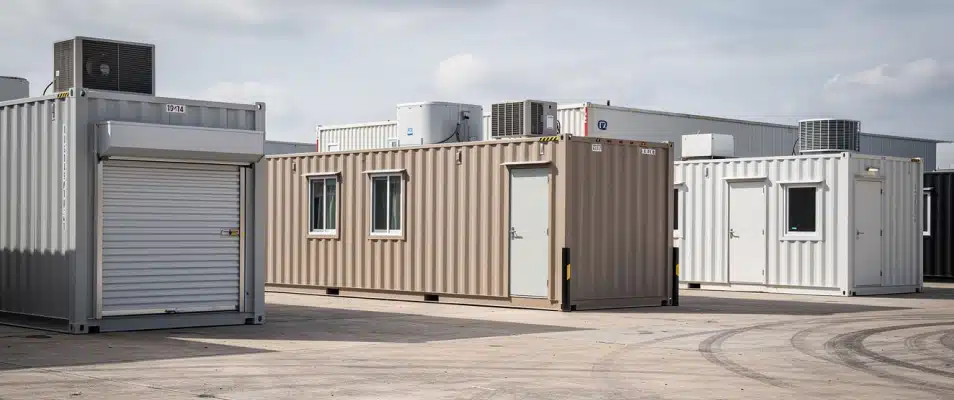
- Entry doors: Standard cargo doors work well for many storage needs, but they are not always the most convenient for day-to-day access. Businesses often add personnel doors or heavy-duty roll-up doors on the side or end of the container to improve accessibility.
- Windows and skylights: If your business will use the container as an office, workshop, or customer-facing space, natural light can make a major difference. Double-pane windows, skylights, and optional security bars are often used to make the interior more functional.
- Flooring upgrades: Standard marine plywood flooring works for many storage applications, but some businesses need more specialized surfaces. Steel overlays, vinyl flooring, and commercial carpet tile can help tailor the space to office, industrial, or heavy-equipment use.
- HVAC and ventilation: Atlanta’s heat and humidity can make interior climate control especially important. Options such as louver vents, turbine vents, exhaust fans, window air conditioning units, and through-wall HVAC systems can improve comfort and protect stored items.
- Insulation and interior finishing: Insulation can help moderate indoor temperatures and make the space more suitable for equipment, inventory, or personnel. Common options include fiberglass insulation with paneling, rigid foam paneling, and closed-cell spray foam.
- Electrical and lighting: Adding power can transform a container from basic storage into a usable commercial space. Common features include 110V receptacles, LED lighting, overhead lighting, flood lights, porch lights, and even data and phone lines.
- Security upgrades: Businesses that store valuable inventory, equipment, or records often add lockboxes, heavy-duty cargo door locks, or security swing arms for personnel doors.
- Shelving and racking: Interior shelving systems help keep supplies, inventory, and tools organized while making better use of the container’s interior footprint.
- Custom paint and branding: A custom paint finish can improve appearance, add branding, and create another layer of protection against the elements.
Commercial Uses for Modified and Custom Storage Containers
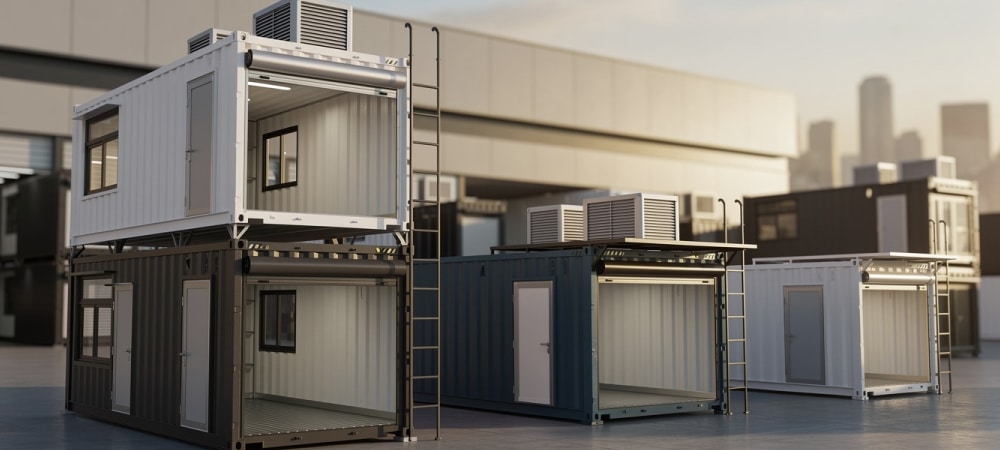
One reason modified containers are so appealing is that they can support a wide range of business applications. In Atlanta and beyond, they are commonly used across construction, industrial, retail, logistics, events, education, and municipal operations.
On construction sites, a modified container may serve as a secure job site office with lighting, outlets, insulation, HVAC, and personnel doors. In industrial settings, a container may be customized for parts storage, equipment protection, or organized tool access with shelving, reinforced flooring, and improved ventilation.
Retail and seasonal businesses often use modified containers for overflow inventory storage or temporary back-of-house space. Event companies may rely on customized containers to store supplies, staging materials, or temperature-sensitive goods. Some organizations even use containers as secure record storage, workshop spaces, or dedicated areas for specialized materials.
The main advantage is the ability to configure the unit around the operation rather than treating it as one-size-fits-all storage.
Make Your Custom Container Work for You
A modified storage container for sale in Atlanta can do much more than hold equipment or extra inventory. With the right combination of upgrades, it can become a more efficient, secure, and practical part of your operation. Whether your business needs better organization, easier access, stronger security, workspace functionality, or climate protection, customization allows the container to support your goals instead of limiting them.
For Atlanta businesses, that kind of flexibility can be especially useful in fast-paced commercial environments. Container Technology offers a wide range of container modifications, from doors, windows, shelving, and lock upgrades to insulation, HVAC, electrical, lighting, flooring, and custom conversions. Request a free quote online or call us today to learn how we can support your operations!
FAQs About Modified and Custom Containers
As you tackle your container modification needs, these questions might arise. Take a knowledgeable approach to your custom container with the answers to some of the most valuable questions buyers often ask.
What custom modifications are available for commercial storage containers in Atlanta?
Commercial storage containers can often be customized with doors, windows, skylights, insulation, interior finishes, HVAC, electrical systems, lighting, shelving, security upgrades, flooring options, and custom paint. Some providers also offer more extensive conversions for businesses that need specialized layouts or non-standard designs.
Can a storage container be modified to include electricity and lighting for an Atlanta job site office?
Yes. Electrical and lighting upgrades are among the most common commercial modifications. A container can be outfitted with receptacles, overhead lighting, LED lighting, exterior lighting, and even data or phone lines. These additions help create a more functional office or workspace for job sites and remote operations.
What ventilation options are available for storage containers used in Atlanta industrial environments?
Ventilation options can include air ducts, rooftop turbine vents, fixed louver vents, and exhaust fans. The best choice depends on what the container will store and how frequently staff will access it. In hot and humid Georgia weather, ventilation is often important for reducing heat buildup and maintaining a more workable interior environment.
Can I add roll-up doors to a storage container for forklift access at my Atlanta facility?
Yes. Roll-up doors are a practical modification for businesses that need faster loading and unloading or easier access for equipment and pallets. When forklift access is a priority, businesses should plan door placement and dimensions carefully to support the way materials move through the site.
Are lockboxes and high-security lock upgrades available for commercial containers in Atlanta?
Yes. Security upgrades commonly include welded lockboxes, heavy-duty cargo door locks, and protective hardware for personnel doors. These features can help businesses better protect tools, inventory, documents, and equipment stored on-site.
What interior shelving and racking modifications can be added to a storage container in Atlanta?
Shelving and racking can be added to support organization and improve space efficiency. Hanging shelving systems are especially useful because they can often be installed using existing interior anchor points. This allows businesses to create more structured storage without extensive modifications to the container itself.
Can a storage container be converted into a secure records storage room for an Atlanta business?
Yes. A container can be adapted for records storage with insulation, climate control, lighting, shelving, and upgraded security features. For businesses storing sensitive files or documents, a modified container can offer an organized space that supports better access and protection.
How do I add climate control to a storage container for pharmaceutical or food storage in Atlanta?
Climate control usually starts with insulation and ventilation, then includes an added HVAC solution based on the required temperature range. For more sensitive uses, businesses may need a container setup specifically designed for temperature-sensitive storage. The right approach depends on how tightly conditions must be controlled and what products will be stored inside.
Are there OSHA-compliant hazmat storage container configurations available in Atlanta?
Some storage containers can be configured for specialized industrial use, but hazmat applications require careful planning. Businesses should make sure the container design aligns with applicable safety, ventilation, containment, and labeling requirements for the materials involved. Make sure to confirm compliance needs before finalizing the build.
How long does it take to receive a custom-modified storage container for a commercial project in Atlanta?
The timeline depends on the complexity of the work. Basic modifications may take only a short time, while more extensive conversions involving electrical systems, insulation, HVAC, multiple access points, and custom finishes can take longer. Planning ahead is important, especially for businesses working around project deadlines.