Complete Guide to Refrigerated Freight


For businesses that rely on temperature-controlled logistics, refrigerated freight plays a huge role in keeping products safe, fresh, and compliant. Whether you ship perishable groceries across the state or deliver vaccines across the country, understanding how refrigerated freight works can help your organization choose the right equipment, avoid costly spoilage, and streamline your supply chain.
This guide breaks down the essentials of refrigerated freight, including the differences between dry vans and reefer trailers, how these systems operate, and the special considerations required for transporting temperature-sensitive cargo.
What is a Reefer Trailer?
A reefer trailer, short for “refrigerated trailer,” is a specialized freight trailer equipped with an integrated cooling system to maintain a set internal temperature. Rather than simply insulating the cargo, a reefer actively cools (and sometimes heats) the interior, allowing products to remain stable in the temperature range they require.
Reefer trailers are the backbone of cold-chain transportation, supporting industries such as:
- Food and beverage distribution
- Floral and agricultural shipments
- Pharmaceuticals and biomedical supplies
- Specialty chemicals and industrial materials
- High-value perishables for e-commerce and retail
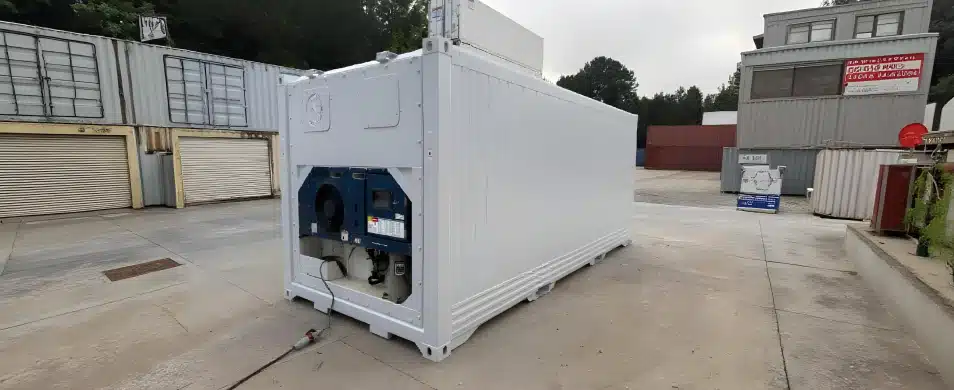
Like refrigerated storage containers, reefer trailers maintain precise temperature control, typically from anywhere from -20°F (and below) to 85°F. This range makes them extremely versatile for businesses with sensitive inventory.
Dry Van vs. Reefer Trailer: What’s the Difference?
Dry vans are the standard enclosed trailers used to haul non-perishable products, including everything from furniture to consumer goods. Although they are visually similar, dry vans and reefer trailers differ in several important ways:
- Temperature Control
- Dry Van: No climate control; interior temperatures fluctuate based on the weather.
- Reefer Trailer: Equipped with active cooling units to maintain consistent temperatures.
- Insulation
- Dry Van: Minimal insulation.
- Reefer Trailer: Heavy-duty insulation built into floors, walls, and ceilings.
- Flooring
- Dry Van: Plywood or composite flooring.
- Reefer Trailer: Aluminum T-rail or grooved floors that allow proper airflow beneath cargo, similar to refrigerated containers.
- Airflow Requirements
- Dry Van: No specific airflow demands.
- Reefer Trailer: Requires consistent airflow to keep temperatures uniform.
- Typical Uses
- Dry Vans: Clothing, boxed goods, furniture, packaged equipment.
- Reefer Trailers: Perishables, frozen items, pharmaceuticals, plants, and temperature-sensitive materials.
For businesses transporting anything impacted by heat, cold, or humidity, reefer freight is essential.
Types of Freight Shipments via Reefer Trucking
Reefer trucking supports an extremely diverse range of industries. Common types of reefer freight include:
Food and Beverage Products
This category requires stringent temperature consistency to avoid spoilage and ensure food safety.
- Fresh produce
- Meat, seafood, and poultry
- Dairy products
- Frozen meals
- Bakery items
- Bulk ingredients
Pharmaceutical and Biomedical Products
These items often require precise temperature ranges and constant monitoring.
- Vaccines
- Insulin
- Medications
- Lab samples
Floral and Agricultural Goods
- Cut flowers
- Plants and seedlings
- Farm-to-market deliveries
Industrial and Specialty Products
- Chemicals that must be kept above freezing
- Temperature-sensitive electronics
- High-value specialty materials
Event and Catering Goods
From mobile catering operations to large-scale events, reefer trailers help maintain safe food conditions during transport and onsite storage.
The variety of products transported in reefer trailers demonstrates why businesses value temperature stability and reliable cooling systems.

Requirements for Different Types of Reefer Freight
Various categories of reefer freight require unique temperature ranges, airflow conditions, and loading procedures. Here are some examples:
Fresh Produce
Produce often needs steady, continuous airflow. Certain fruits and vegetables also produce ethylene gas, which means incompatible items must be separated.
Frozen Goods
Frozen products require stable sub-zero temperatures. Cycle mode may be used because frozen freight does not require constant airflow.
Pharmaceuticals
These loads often demand narrow temperature bands, digital temperature monitoring, and strict regulatory compliance.
Meat and Seafood
These products generally require colder temperatures and careful sanitation during loading.
Floral Items
Flowers are extremely sensitive to heat and humidity, and even slight temperature changes can impact product viability.
Understanding your product’s unique requirements helps you select the right reefer trailer, temperature mode, and loading practices.
Reefer Trailers vs. Refrigerated Containers: What’s Best for Your Business?
Reefer trailers offer unmatched mobility, making them ideal for transporting temperature-sensitive goods across long distances. Refrigerated containers provide the same level of temperature precision but are typically used for stationary storage or onsite operations.
Your choice depends on your needs:
- Transporting products across regions: Reefer trailers
- Onsite cold storage or overflow capacity: Refrigerated containers
- Events, construction sites, remodels, or seasonal demand: Mobile refrigerated trailers and walk-in coolers
- Non-refrigerated but temperature-stable storage: Insulated containers
Many businesses use a combination of different types of refrigerated storage to suit their needs.
Refrigerated Transportation and Storage You Can Trust
Refrigerated freight is essential for maintaining product quality, safety, and compliance across numerous industries. By understanding how reefer trailers work, what types of products require refrigerated transport, and how specialized systems like airflow, insulation, and continuous cooling help protect goods, businesses can make informed decisions about their cold-chain logistics.
Looking for on-site refrigerated storage, mobile cold rooms, or insulated units for your business? Container Technology offers a full range of refrigerated containers, walk-in coolers, trailers, and insulated units to support your unique needs in Atlanta and beyond. Request a free quote online or call us today to get started!