
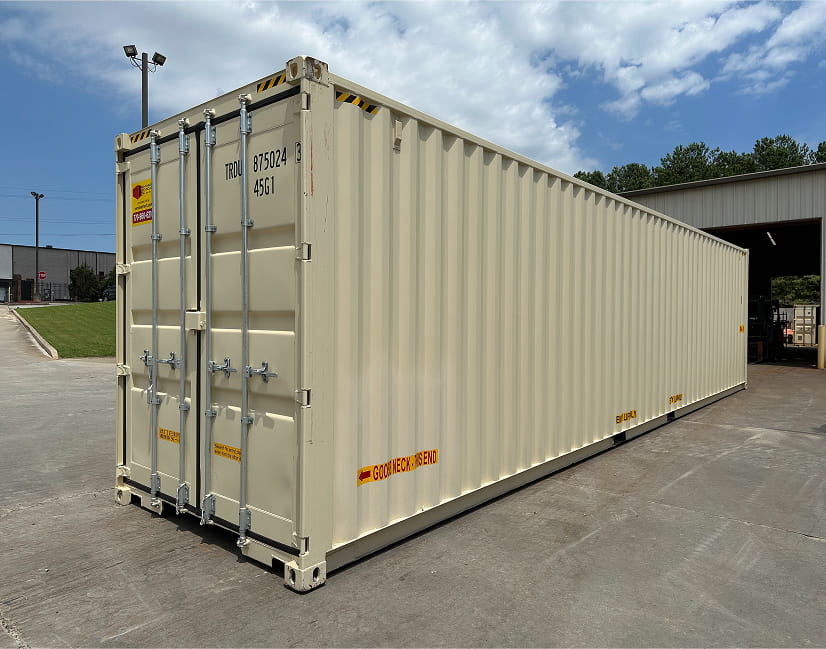
Common Shipping Container Sizes Explained for Atlanta Businesses: Which Container Is Right for Your Operation?


When Atlanta businesses decide to invest in a shipping container, one of the first questions they ask is simple: What size container(s) do I need? While the answer depends on your industry, storage requirements, and future growth plans, understanding the differences between available container sizes can help you make the right investment from the start.
Whether you’re looking for shipping containers for sale in Atlanta for construction, retail, manufacturing, logistics, or industrial applications, choosing the right size container can significantly impact efficiency, accessibility, and long-term value.
At Container Technology, we’ve spent over 35 years helping Atlanta-area businesses select, customize, and deploy shipping containers that meet their exact operational needs. From standard 20ft containers to specialized high-cube units and custom-modified containers, Container Technology offers one of the Southeast’s most comprehensive inventories of shipping containers.
In this guide, we’ll explain the most common shipping container sizes, their capacities, ideal applications, and how to determine which option is best for your operation.
Looking to buy shipping containers in Atlanta from a company businesses have trusted for decades? Talk to Container Technology’s experienced team to get matched with the right container sizes for your business.
Why Container Size Matters
Many buyers focus primarily on price when shopping for shipping containers. While budget is certainly important, container size often has a much greater impact on operational efficiency.
Choosing a container that’s too small can lead to overcrowding, disorganization, and the need for additional storage sooner than expected. On the other hand, purchasing a container that’s significantly larger than necessary may require more space on your property and increase transportation costs.
The right container size should balance:
- Current storage requirements
- Future growth projections
- Site constraints
- Accessibility needs
- Budget considerations
- Loading and unloading frequency
By understanding the strengths of each container size, Atlanta businesses can make smarter purchasing decisions that support long-term operations.
Understanding Standard Shipping Container Sizes
The most popular commercial shipping containers fall into three sizes/types:
Each serves a different purpose and offers unique advantages depending on the business application.
20ft Shipping Containers: Compact and Versatile
Among all available container sizes, 20ft shipping containers remain one of the most popular options for Atlanta businesses.
Exterior Dimensions
- Length: 20 feet
- Width: 8 feet
- Height: 8 feet 6 inches
Interior Capacity
A standard 20’ shipping container provides approximately:
- 1,165 cubic feet of storage space
- 160 square feet of floor space
Ideal Uses for 20ft Containers
Many Atlanta businesses choose 20’ containers because they offer substantial storage capacity while maintaining a relatively small footprint.
Common applications include:
- Construction Site Storage: Contractors frequently use 20-foot containers to secure power tools, equipment, raw materials, and safety supplies. Their compact size allows placement on job sites where space may be limited.
- Retail Inventory Storage: Retail businesses often use 20-foot containers for seasonal inventory, overstock merchandise, promotional displays, and equipment storage.
- Small Manufacturing Operations: Manufacturers use 20-foot containers to store raw materials, components, packaging supplies, and finished products.
- Agricultural Applications: Farms and agricultural businesses utilize containers for feed storage, equipment storage, supply inventory, and chemical storage (when properly modified).
Advantages of 20ft Containers
Benefits include:
- Easier placement on smaller properties
- Lower transportation costs
- Greater accessibility
- Lower initial investment
- Strong resale value
For many Atlanta businesses, a 20-foot container offers the ideal balance of affordability and functionality.
40ft Shipping Containers: Maximum Storage Capacity
For businesses with larger storage requirements, 40ft shipping containers offer Atlanta companies significantly more space.
Exterior Dimensions
- Length: 40 feet
- Width: 8 feet
- Height: 8 feet 6 inches
Interior Capacity
A standard 40’ container provides approximately:
- 2,350 cubic feet of storage space
- 320 square feet of floor space
This effectively doubles the storage capacity of a 20’ container.
Ideal Uses for 40-Foot Containers
- Large Construction Projects: Major construction firms often rely on 40-foot containers to store bulk materials, equipment, tools, and jobsite inventory.
- Distribution Centers: Atlanta’s thriving logistics sector frequently uses 40-foot containers for inventory overflow, temporary warehousing, freight staging, and distribution support.
- Manufacturing Facilities: Manufacturers appreciate the larger footprint for production materials, product storage, equipment housing, and supply chain management.
- Commercial Storage: Businesses needing substantial storage space often find that one 40-foot container is more efficient than multiple smaller units.
Advantages of 40ft Containers
Benefits include:
- Maximum storage volume
- Lower cost per cubic foot
- Reduced need for multiple containers
- Excellent scalability
- Ideal for high-volume operations
For organizations with substantial storage needs, a 40-foot container often delivers the best overall value.
High-Cube Containers: When Extra Height Matters
While standard containers dominate the market, many Atlanta businesses benefit from high-cube shipping containers.
What Is a High-Cube Container?
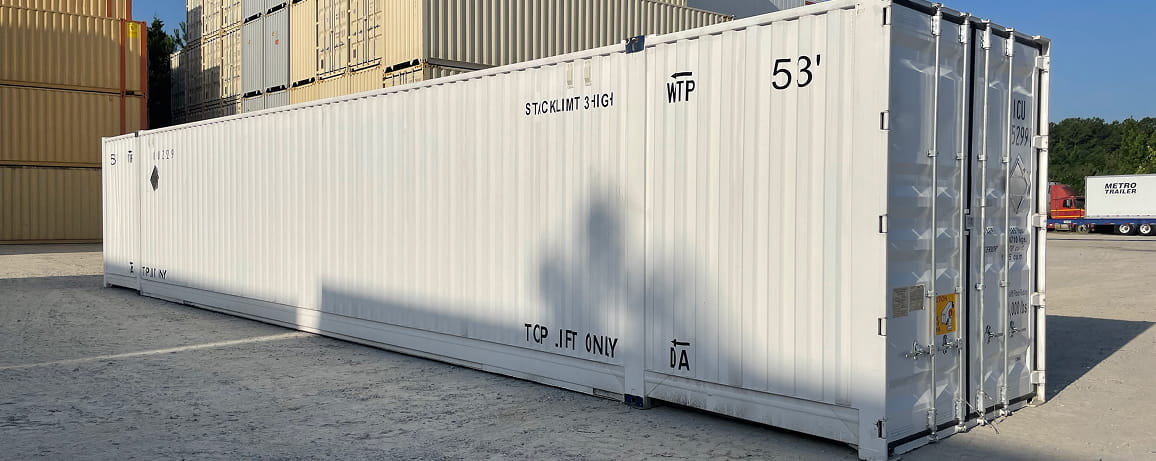
A high-cube container offers the same footprint as a standard 40-foot container but includes an additional foot of height. This creates an extra estimated 2,700 cubic feet of storage capacity in comparison to standard options. This additional volume can significantly improve storage efficiency and make it easier to store oversized equipment or additional materials.
Sizes Available
40ft high cube containers are generally the most popular high-cube size for large-scale operations and construction sites.
Industries That Benefit from High-Cube Containers
Certain industries gain particular advantages from the increased height.
- Manufacturing: Manufacturers storing large equipment or palletized inventory often require the extra vertical space.
- Logistics and Distribution: High-cube containers accommodate high-stacked pallets, oversized freight, and bulk inventory.
- Automotive Businesses: Automotive suppliers frequently use high-cube containers for parts storage, equipment storage, and specialty inventory.
- Modular Building Projects: High-cube containers are popular for container modifications because the additional ceiling height creates a more comfortable interior environment.
Customized Shipping Containers for Atlanta Businesses
One of the biggest advantages of working with Container Technology is access to customized container solutions.
Many businesses discover that a standard container meets most (but not all) of their requirements.
Container Tech offers modifications, including:
- Roll-Up Doors: Improved access for frequent loading and unloading.
- Personnel Doors: Provide convenient employee entry without opening cargo doors.
- Windows: Increase natural lighting and visibility.
- Insulation: Improve temperature control and energy efficiency.
- HVAC Systems: Create climate-controlled environments.
- Electric/Lighting: Support lighting, equipment, and operational needs.
- Shelving Systems: Maximize organization and storage efficiency.
- Security Upgrades: Protect valuable inventory and equipment.
Customized containers can serve as mobile offices, equipment rooms, retail spaces, workshops, warehouses, industrial storage facilities, and more.
Factors Atlanta Businesses Should Consider Before Buying
When evaluating shipping containers for sale in Atlanta, businesses should consider several important factors beyond size alone.
Available Site Space
Measure carefully before purchasing, considering the container footprint, delivery access, loading clearances, and future expansion. If buying multiple containers, take this into consideration.
Storage Requirements
Evaluate both current and future inventory needs. Many businesses underestimate future growth or the need for additional containers in the short or long term.
Accessibility
Will employees need frequent access? If so, modifications such as personnel doors and shelving may improve efficiency.
Weight Requirements
Different applications involve varying load capacities. Heavy equipment storage may influence container selection.
Long-Term Business Goals
Purchasing a container is often a long-term investment. Selecting a slightly larger container today may eliminate the need for additional purchases later.
Why Atlanta Businesses Choose Container Technology
Businesses searching for storage containers for sale in Atlanta consistently turn to Container Technology because of our extensive experience and inventory.
Decades of Industry Expertise
Container Tech has helped businesses across Georgia and the Southeast find storage solutions that support operational efficiency and growth since 1988.
Extensive Inventory
We maintain a wide selection of containers beyond 20ft standard, 40ft standard, and high-cube options. Our inventory includes new and used varieties of specialty units, including double-door, open-side, and refrigerated containers.
Custom Modification Capabilities
Our team can transform standard containers into highly functional business assets.
Reliable Delivery
We understand the logistical challenges businesses face and work to ensure prompt, professional delivery.
Customer-Focused Service
Every operation is different. Our expert team has over 100 years of combined experience in the industry, meaning we know containers and the optimal sizes for different business types like the back of our hand. We take the time to understand your goals and recommend the best container solution for your specific application.
Choosing the Right Shipping Container for Your Business
There is no universal answer when it comes to selecting a shipping container size.
For some businesses, a 20-foot container offers the perfect combination of affordability, accessibility, and storage capacity. For others, a 40-foot or high-cube container option provides the space needed to support larger-scale operations.
The key is evaluating:
- Available space
- Storage volume requirements
- Budget
- Accessibility needs
- Future growth plans
By working with experienced container specialists, businesses can avoid costly mistakes and invest in a solution that delivers long-term value.
Whether you’re interested in standard containers, high-cube, customized storage solutions, or simply exploring your options, Container Technology can help you identify the ideal container for your operation.
Contact Container Technology today to learn more about our inventory, customization services, and expert guidance for Atlanta businesses seeking durable, secure, and cost-effective shipping container solutions.
Atlanta Shipping Container Sizes | FAQs
What size shipping container do I need?
The right container size depends on your storage volume, available space, and operational requirements. Small businesses, construction sites, and retail operations often find a 20-foot container sufficient, while larger manufacturers, distributors, and logistics companies frequently benefit from a 40-foot standard or high-cube container. Container Technology can help evaluate your specific needs and recommend the best option.
Is a 20’ or 40’ container better for storage?
Neither is universally better, as it depends on your application. A 20-foot container offers easier placement and lower upfront costs, while a 40-foot container provides approximately twice the storage capacity and often a lower cost per cubic foot. Businesses with significant inventory or equipment storage needs generally prefer 40-foot containers.
What businesses use high-cube containers?
High-cube containers are commonly used by manufacturers, distributors, logistics companies, automotive businesses, construction firms, and organizations requiring additional vertical storage space. They are also popular for custom container offices, workshops, and modular building projects because of their increased ceiling height.
How much can each container size hold?
A standard 20-foot container offers approximately 1,165 cubic feet of storage space and 160 square feet of floor space. A standard 40-foot container provides approximately 2,350 cubic feet and 320 square feet of floor space. A 40-foot high-cube container offers over 2,694 cubic feet of storage capacity thanks to its additional foot of height.