
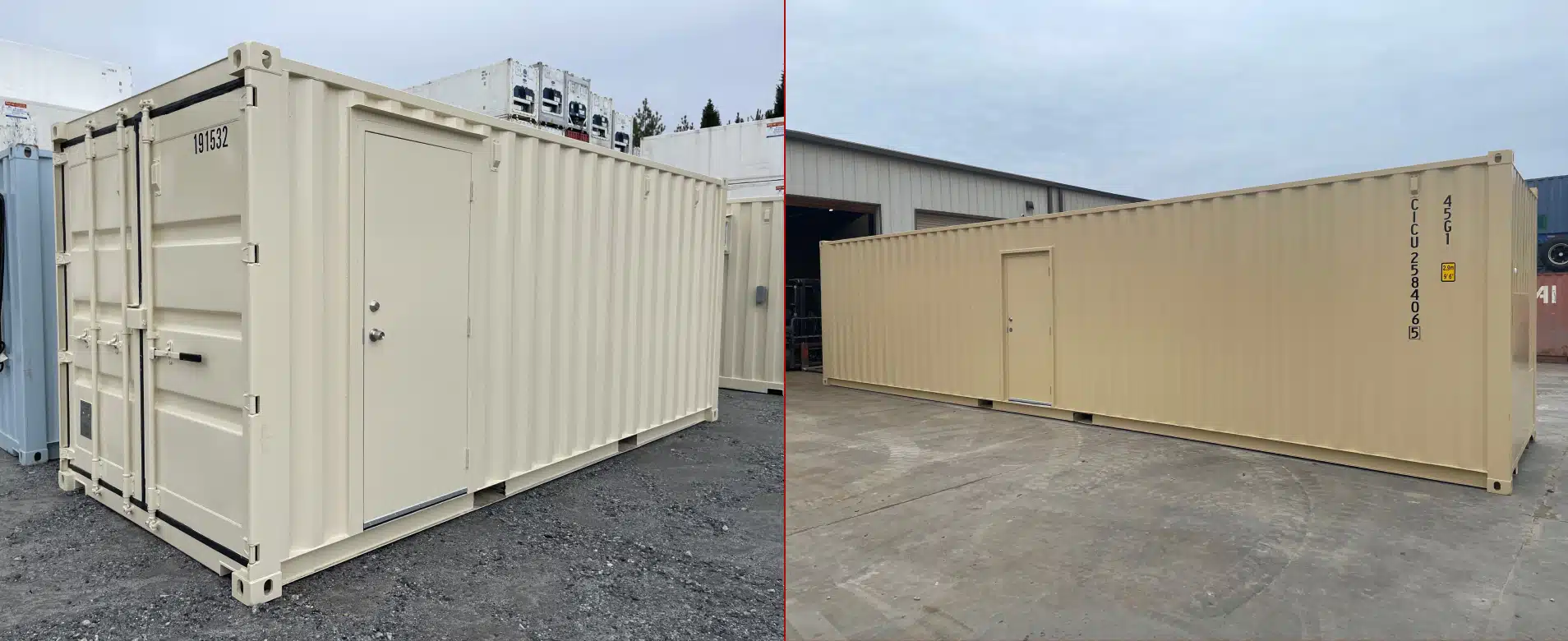
20ft vs. 40ft Shipping Containers for Sale in Roswell: Which Size is Right for Your Business?


As businesses throughout Roswell continue to grow, many are searching for flexible and cost-effective ways to increase storage capacity without committing to expensive building expansions or warehouse leases. Whether you operate a construction company, retail business, logistics operation, or manufacturing facility, shipping containers have become one of the most practical solutions for secure on-site storage and workspace needs.
However, one of the biggest questions businesses face when purchasing a container is simple: Should you choose a 20ft container or a 40ft container?
Both options offer strong durability, reliable security, and long-term value, but the right choice depends on your available space, operational goals, and inventory requirements. Understanding the differences between these container sizes for commercial use can help your business make a smarter investment while improving efficiency and organization.
This guide explores the key differences between 20ft and 40ft shipping containers, the advantages of each option, and how Roswell businesses can determine which size best fits their operations.
Why Roswell Businesses are Investing in Shipping Containers
Roswell’s business landscape continues to expand across industries like construction, retail, hospitality, healthcare, and professional services. As companies grow, they often encounter the same challenge: finding affordable storage that can scale alongside operations.
Traditional construction projects are expensive and time-consuming. Leasing warehouse space may lock businesses into long-term commitments that don’t provide enough flexibility. Shipping containers offer a more adaptable alternative.
Businesses choose shipping containers because they provide:
- Fast deployment
- Lower upfront costs
- Excellent durability
- Secure storage
- Portability
- Flexible customization options
For many organizations, containers become an extension of their operational workspace. They can support inventory overflow, secure equipment storage, mobile offices, workshops, and even refrigerated storage applications.
When comparing a 20ft shipping container in Roswell, GA to a larger 40-foot option, businesses should evaluate both their current needs and future growth plans.
Understanding Standard Shipping Container Sizes
Shipping containers are manufactured in standardized dimensions, which makes them easy to transport, stack, and integrate into commercial workflows.
The two most common container sizes for commercial use are:
While both share the same standard width and height, the primary difference lies in their storage capacity and footprint.
20ft Shipping Container Dimensions
A standard 20ft container typically measures:
- 20 feet long
- 8 feet wide
- 8 feet 6 inches tall
Interior storage capacity is generally around 1,170 cubic feet.
These containers are compact enough to fit comfortably on many commercial properties while still offering substantial storage space.
40ft Shipping Container Dimensions
A standard 40ft container generally measures:
- 40 feet long
- 8 feet wide
- 8 feet 6 inches tall
Interior storage capacity is approximately 2,390 cubic feet, nearly double the space of a 20ft container.
Businesses seeking a 40ft shipping container for sale in Roswell often choose this option because it maximizes storage efficiency while keeping costs lower than adding permanent warehouse space.
The Advantages of a 20ft Shipping Container
For many businesses, a 20ft container provides the ideal balance between storage capacity and space efficiency.
Easier Placement on Commercial Properties
One of the biggest advantages of a 20ft container is its smaller footprint. Roswell businesses with limited yard space, smaller parking areas, or tighter job sites often find that a 20ft unit fits more easily into their layout.
Construction companies, retail stores, and office properties may not have enough unused space for a 40ft container without disrupting traffic flow or operations. A 20ft container allows businesses to gain secure storage while preserving flexibility on-site.
Lower Upfront Investment
Smaller containers generally cost less than larger units, making them an attractive option for businesses with moderate storage needs or tighter budgets. For companies testing container storage for the first time, a 20ft container offers an affordable entry point without requiring a major financial commitment.
Additionally, delivery and site preparation costs are often lower due to the smaller size and lighter weight of the unit.
Ideal for Moderate Storage Needs
A 20ft shipping container for sale in Roswell, GA, is frequently used by businesses that need storage for:
- Tools and equipment
- Retail inventory
- Office supplies
- Maintenance materials
- Landscaping equipment
- Small machinery
- Archived records
Because these units remain relatively compact, businesses can organize contents efficiently while still maintaining easy access to stored items.
Easier Organization
Smaller containers naturally encourage more organized storage practices. Employees can access tools, inventory, and supplies without digging through excessive clutter in a larger space.
For businesses using containers daily, this improved accessibility can help streamline workflows and reduce downtime.
Greater Mobility
Since 20ft containers weigh less and occupy less space, they are often easier to relocate if operational needs change. Businesses with temporary projects or changing job sites may benefit from the additional portability.
Industries such as construction and event management commonly use 20ft units because they can be repositioned quickly and efficiently.
The Advantages of a 40ft Shipping Container
While 20ft containers work well for many applications, businesses with higher storage demands often benefit more from the larger capacity of a 40ft unit.
Significantly More Storage Space
The most obvious advantage of a 40ft shipping container for sale in Roswell is the dramatic increase in storage capacity.
A 40ft container can accommodate:
- Large quantities of inventory
- Palletized shipments
- Bulky equipment
- Oversized machinery
- Large construction materials
- Extensive seasonal stock
For businesses experiencing rapid growth, this extra space can eliminate the need for multiple smaller containers.
Better Long-Term Value Per Square Foot
Although a 40ft container costs more upfront, the price per square foot of storage is typically lower compared to a 20ft unit. Businesses with substantial inventory needs may find that purchasing one large container is more cost-effective than purchasing two smaller units over time.
This improved storage efficiency makes 40ft units especially popular in logistics, manufacturing, and warehousing environments.
Reduced Need for Additional Units
Using a single large container can simplify operations by centralizing inventory and reducing clutter across a property.
Instead of managing multiple storage units, businesses can consolidate materials into one secure location. This often improves organization and reduces time spent moving inventory between containers.
Ideal for Bulk Inventory Management
Retailers, distributors, and wholesalers frequently rely on larger containers to manage fluctuating inventory levels throughout the year.
A 40-foot container can comfortably support:
- Seasonal merchandise
- Promotional inventory
- Packaging materials
- Shipping supplies
- Overstock products
For businesses that experience holiday surges or rapid sales fluctuations, the added capacity provides important operational flexibility.
Better for Large Equipment Storage
Many industrial and construction companies prefer 40ft containers because they can store larger equipment without requiring disassembly. Bulky tools, machinery, and oversized materials fit more comfortably inside larger units, allowing crews to maintain organized and secure job sites.
Comparing Storage Capacity: 20ft vs. 40ft Containers
Understanding how much each container can hold is essential when evaluating container sizes for commercial use.
A standard 20ft container generally holds:
- About 8 standard pallets
- Roughly the contents of a small office or several rooms of inventory
A standard 40ft container generally holds:
- Around 18 standard pallets
- Nearly double the cubic storage space of a 20ft container
For businesses storing palletized inventory, this difference can significantly impact workflow efficiency. Companies that anticipate inventory growth should also consider whether future expansion may require additional storage sooner than expected.
Which Industries Benefit Most From 20ft Containers?
Certain industries naturally benefit more from compact storage solutions. These industries typically find the most success with a 20ft unit.
Construction Companies
Construction businesses frequently use 20ft containers for:
- Tool storage
- Equipment protection
- Job site offices
- Material staging
Their smaller size fits more easily on active construction sites where space is limited.
Small Retail Businesses
Retailers often use 20ft units for:
- Overflow inventory
- Seasonal stock
- Promotional materials
- Backroom storage alternatives
This allows stores to free up valuable interior retail space while maintaining convenient access to products.
Landscaping and Service Companies
Landscaping, plumbing, HVAC, and electrical companies commonly use smaller containers to store tools, parts, and maintenance supplies securely on-site.
Professional Offices
Businesses with document retention needs often choose 20ft containers for secure file storage or equipment housing.
Which Industries Benefit Most From 40ft Containers?
Larger businesses or operations with extensive inventory often benefit more from 40ft units.
Manufacturing Facilities
Manufacturers frequently use larger containers for:
- Raw material storage
- Component organization
- Finished goods inventory
- Overflow warehouse capacity
The larger footprint supports high-volume operations efficiently.
Distribution and Logistics Companies
Distribution centers often rely on 40ft containers to stage shipments and organize products before transport. The ability to hold large quantities of palletized inventory makes these units highly valuable for logistics operations.
Large Retail Operations
Major retailers and wholesalers use 40ft containers to manage inventory spikes during busy shopping seasons. These containers allow businesses to expand storage capacity quickly without leasing additional warehouse space.
Agricultural Businesses
Agricultural operations frequently use larger containers to store:
- Feed
- Equipment
- Harvested crops
- Bulk supplies
The additional space supports large-scale operational demands throughout the year.
Space Requirements and Site Planning
Before purchasing a container, businesses must evaluate their available space carefully.
A 20ft container generally requires less site preparation and can fit into tighter areas. Businesses with smaller lots may find these units easier to integrate into existing layouts.
A 40ft container requires more clearance for both placement and delivery access. However, businesses with larger yards or industrial properties often benefit from maximizing storage with fewer units.
It’s also important to consider:
- Truck access
- Ground leveling
- Drainage
- Zoning requirements
- Workflow accessibility
Proper placement helps ensure long-term usability and operational efficiency.
Customization Options for Both Container Sizes
Both 20ft and 40ft containers can be heavily customized to support specific commercial applications.
Popular modifications include:
- Shelving systems
- Roll-up doors
- Electrical wiring
- Lighting
- Insulation
- HVAC systems
- Ventilation
- Security lockboxes
- Windows
- Personnel doors
Businesses can turn containers into:
- Mobile offices
- Workshops
- Equipment rooms
- Climate-controlled storage
- Retail spaces
- Break rooms
The choice between a 20ft and 40ft container often depends on how much interior workspace or storage flexibility is required after modifications are added.
Cost Considerations for Businesses
Budget plays an important role when selecting between container sizes for commercial use.
A 20ft container generally offers:
- Lower upfront purchase costs
- Lower delivery expenses
- Reduced site preparation costs
A 40ft container generally provides:
- Better storage value per square foot
- Greater long-term scalability
- Reduced need for future expansion
Businesses should evaluate not only their immediate storage needs but also how their operations may evolve over time. In many cases, purchasing slightly more storage than is currently needed can prevent costly upgrades later.
Choosing the Right Shipping Container for Your Business
The right container size ultimately depends on several key factors:
Choose a 20ft Container If:
- You have limited property space
- Your storage needs are moderate
- You want a lower upfront investment
- Portability is important
- You need organized access to smaller inventories
Choose a 40ft Container If:
- You store high inventory volumes
- You need long-term scalability
- You manage palletized goods
- You want maximum storage efficiency
- Your business expects continued growth
Businesses in Roswell often find that carefully evaluating both operational workflows and future expansion plans helps guide the best decision.
Reliable Shipping Containers for Sale in Roswell
Whether your business needs compact on-site storage or large-scale inventory management solutions, shipping containers provide one of the most durable and cost-effective storage options available today.
Container Technology offers high-quality container solutions designed to support businesses throughout Roswell and the greater Atlanta area. From secure storage to fully customized commercial units, our team helps businesses find the right container configuration for their operational goals.
Whether you’re considering a 20ft shipping container or a 40ft shipping container for sale Roswell businesses trust, choosing the right size can help improve efficiency, organization, and long-term flexibility.
Request a free quote online or call us today to get started.
GET A FREE QUOTE NOW CALL TODAY
Roswell Shipping Containers | FAQs
What size shipping container should a business buy?
The right container size depends on your storage volume, available space, and future growth plans. A 20-foot container works well for moderate storage needs and smaller properties, while a 40-foot container is better suited for businesses with high inventory volumes or large equipment. Companies should evaluate both current and anticipated storage demands before making a purchase.
How much storage fits in a 40ft container?
A standard 40ft shipping container offers approximately 2,350 cubic feet of interior storage space and can typically hold around 18 standard pallets. These units are commonly used for bulk inventory, construction materials, palletized goods, and oversized equipment.
Is a 20ft container enough for commercial storage?
For many small to mid-sized businesses, a 20ft container provides ample commercial storage capacity. These units are ideal for storing tools, maintenance equipment, moderate inventory levels, and office supplies. However, businesses with rapidly growing inventory or large-scale operational needs may eventually require additional storage space.
Are shipping containers weatherproof?
Yes. Shipping containers are designed to withstand harsh ocean shipping conditions, making them highly resistant to rain, wind, and outdoor exposure. Proper maintenance helps ensure long-term weather resistance and durability.
Can shipping containers be customized for business use?
Absolutely. Businesses frequently customize containers with shelving, insulation, lighting, HVAC systems, roll-up doors, and electrical wiring. Containers can also be converted into offices, workshops, retail spaces, and climate-controlled storage units.
How long do commercial shipping containers last?
With proper maintenance, commercial shipping containers can last 20 years or more. Their heavy-duty steel construction allows them to withstand demanding environments while maintaining structural integrity over time.