
Shipping Containers & Trailers in Atlanta: A Complete Buyer’s Guide


Businesses across metro Atlanta run into the same problem eventually: they need more space, and they need it faster than a construction timeline allows. A contractor working a job site off I-285 needs somewhere secure to keep tools overnight. A distributor near the airport needs overflow room for a seasonal spike. A restaurant group needs cold storage that doesn’t require ripping into a kitchen’s existing footprint. These scenarios call for speedy solutions.
Atlanta shipping containers for sale and trailers solve these problems in ways that permanent construction can’t match on timeline or cost, which has made them a standard fixture across construction sites, warehouses, farms, and retail lots throughout Georgia.
This guide walks through what buyers actually need to know before purchasing a container or trailer in Atlanta: the types available, how sizing works, what modifications are possible, what local permitting looks like, and how to think about cost. Find the information you need to make the best choice for your needs.
Work with an experienced team to get the right shipping containers for sale in Atlanta for your business. Contact Container Technology today!
Types of Shipping Containers Available in Atlanta
Atlanta businesses typically choose from four main container categories, each suited to a different set of needs.
Standard Shipping Containers
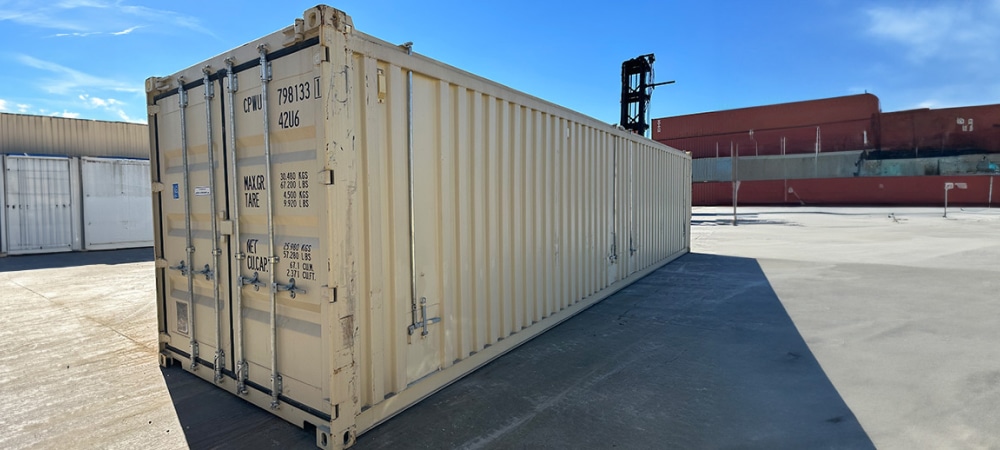
Standard containers are built from corrugated, corrosion-resistant steel with double doors and marine-grade plywood flooring. They come in three common lengths: 10-foot containers, which work well for businesses with tight lots or modest storage needs; 20-foot containers, the most commonly ordered size because they balance capacity against footprint; and 40-foot containers, well-suited for bulk storage, palletized goods, or operations with high inventory turnover. Standard units measure 8’6″ in height.
High Cube Containers
High cube containers add a full extra foot of interior height, standing at 9’6″. The additional clearance allows businesses to store tall equipment, stacked pallets, or anything that needs vertical room, and it’s part of why high cubes have become popular for workspace conversions. They’re available in 20-foot, 40-foot, 45-foot, and 53-foot lengths.
Open Side & Double Door Containers
Open side containers include bi-fold doors along one full side wall, which makes loading and unloading with a forklift much easier than working through the end doors alone. These units are often used for pop-up retail shops, event staging, and construction sites, which all need fast access. Double door containers, sometimes called tunnel containers, have doors on both ends instead, which allows two-way loading and is useful for operations that need to sort or stage materials quickly.
Refrigerated Containers & Trailers
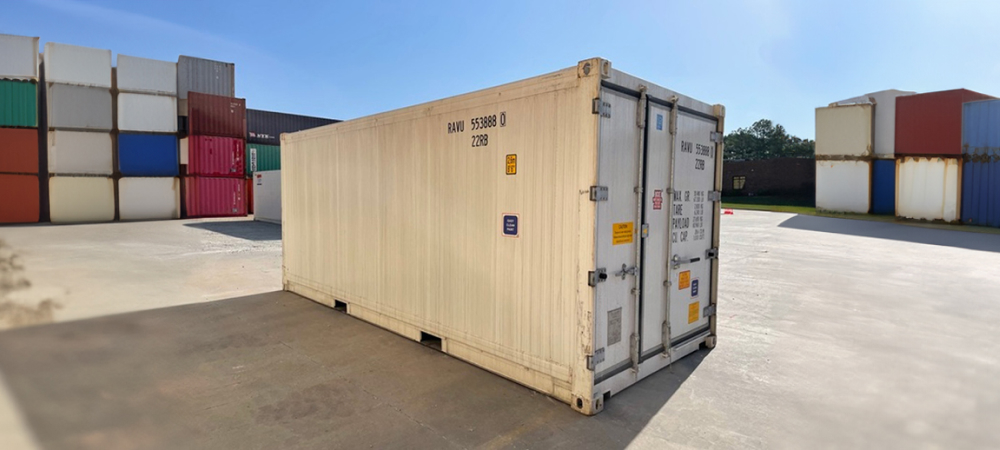
Refrigerated units and refrigerated trailers maintain precise temperature control for goods that need consistent conditions without fluctuations. Food distributors, restaurants, floral businesses, and agricultural operations across Georgia rely on these to keep product quality consistent without building out a dedicated cold room.
New vs. Used Containers: Which Should You Choose?
The choice between new and used containers mostly comes down to budget and how long the container needs to last. Used containers cost less upfront and are still structurally sound, even with cosmetic wear like surface rust or minor dents, which makes them a reasonable fit for short-term storage or businesses with tighter budgets.
New, or “one-trip,” containers have only made a single journey from the factory, so they arrive near flawless. They cost more but offer a longer usable life and a cleaner appearance, which matters for businesses using containers as customer-facing space or long-term fixtures on a property.
Pricing for both categories moves with broader market conditions. Steel costs, global shipping demand, and supply chain disruptions all affect how much inventory is available and what it costs, so prices for Atlanta buyers may vary.
A Different Solution: The Role of Trailers
Trailers fill a different niche than containers by offering total mobility. Where a container is meant to sit in place and occasionally move if needed, a trailer is built to move with a business as job sites, events, or needs shift. Construction firms working across multiple sites, logistics companies staging shipments, and businesses that need temporary storage without a permanent placement all lean on trailers for that flexibility. Depending on the application, trailers can serve as mobile storage, equipment transport, or a base for a customized mobile workspace.
Customizing Containers for Specific Business Needs
Adding customizations to your basic storage container turns a simple steel box into a functional part of daily operations. Common modifications include:
- Lighting: Electrical wiring and fixtures for containers used as workspaces or after-hours storage.
- HVAC and ventilation: Temperature and airflow control for units holding sensitive inventory or serving as offices.
- Insulation: Interior finishing that stabilizes internal temperature and improves comfort for occupied spaces.
- Shelving and racking: Storage systems that organize inventory and make better use of interior volume.
- Roll-up and entry doors: Additional access points beyond the standard cargo doors, useful for frequent loading.
- Windows and skylights: Natural light for containers converted into offices or retail space.
- Locking mechanisms and lock boxes: Added security layers beyond the standard lockable doors.
- Custom exterior paint and branding: Useful for containers serving as pop-up shops or customer-facing spaces.
Businesses often combine several of these options to transform a container into a mobile office, a job site break room, a climate-controlled storage unit, or a retail pop-up. Most suppliers can scope custom work based on the specific application.
Uses for Shipping Containers and Trailers Across Industries
Container use spans nearly every sector operating in the region, but a handful of industries account for most of the demand.
Construction and Contracting
Construction firms use containers for secure, on-site tool and material storage, cutting down on the back-and-forth between job sites and off-site storage facilities. Keeping equipment centralized on location reduces downtime and helps protect valuable tools from theft or weather exposure between shifts. Many contractors also convert a unit into a job site office, giving project managers a dedicated workspace without waiting on a trailer rental.
Retail and Inventory Management
Retail businesses use containers to manage seasonal inventory and promotional stock without overcrowding sales floor space. Rather than leasing additional warehouse square footage or letting a stockroom spill into customer-facing areas, retailers can stage overflow product on-site and pull from it as needed, especially during peak shopping periods or promotional pushes.
Manufacturing & Industrial Operations
Manufacturers store raw materials, components, and finished goods close to the production line, often choosing high-cube units for the extra vertical capacity. Keeping supplies within reach of the production floor cuts down on internal transport time and helps operations stay organized as inventory volume grows.
Logistics & Distribution
Logistics and distribution companies use containers for staging outgoing shipments and organizing inventory by destination. Because container sizes are standardized, they slot directly into existing shipping and transportation workflows, which makes them a natural fit for cross-docking and time-sensitive staging operations.
Farms & Agriculture
Farms and agricultural operations rely on containers for equipment and harvested crop storage. A container gives growers a secure, weather-resistant place to keep machinery, feed, and tools without building a permanent structure. Farmers can reposition units as field use or storage needs shift season to season.
Food Service & Restaurants
Food service businesses lean on refrigerated units to protect perishables, from proteins and produce to prepared items awaiting transport. Reefers help restaurants, caterers, and distributors maintain consistent temperature control without the cost of building out additional cold storage inside an existing kitchen.
Disaster Relief & Emergency Response
Disaster relief and emergency response operations use containers and trailers as mobile command centers and supply storage. Because units can be delivered and positioned quickly, they give response teams a functional base or storage point in these critical situations where they don’t have time for permanent solutions.

Permit Requirements for Containers in Atlanta
Permit requirements depend on the jurisdiction and how the container will be used. These regulations vary by county and municipality across metro Atlanta, and factors like placement duration, zoning classification, and whether the unit will be used as occupied space (for instance, an office vs. standard storage) all affect what’s required. Businesses should check with local zoning offices before placement rather than assuming a container falls outside permitting rules, since requirements differ enough between neighboring jurisdictions that assumptions can create costly delays.
Atlanta Container Delivery Timelines
One of the more consistent advantages containers hold over permanent construction is speed. In most cases, a standard container can be delivered and ready for use within days rather than weeks. Delivery timing depends on inventory availability, site accessibility, and whether the unit requires modification before drop-off. For example, a container needing custom HVAC or shelving will naturally take longer to prepare than one going out as-is. Site access matters too; locations requiring a tilt-bed truck or crane for placement may need additional coordination.
Are Shipping Containers a Better Investment Than Building Expansions?
For most short- to medium-term needs, shipping containers are a much better investment than building expansions. Permanent building expansions carry substantially higher costs once materials, labor, architectural and engineering fees, permitting, and inspections are factored in, and construction commonly stretches across several months before a business can actually use the new space. By contrast, buying shipping containers involves a lower upfront cost, minimal site preparation (often just a level surface, gravel pad, or concrete pad), and a timeline of a few days.
That doesn’t mean Atlanta shipping containers for sale are the right call for everything. Businesses with predictable, long-term growth who need a fully integrated indoor environment are often better served by permanent construction despite the higher cost and longer timeline. The right choice depends on your business’s specific needs.
Container and Trailer Longevity
With reasonable upkeep, shipping containers commonly last 20 to 30 years. Their steel construction resists pests, corrosion, and wear that would compromise a wood-frame structure. Extending that lifespan mostly comes down to basic maintenance: repainting when needed, checking door seals, and making sure water drains away from the unit rather than pooling underneath it.
Trailers, depending on use intensity and how they’re maintained, can offer a similarly long service life. This is especially true when they aren’t subjected to constant heavy-load transport.
Choosing a Container and Trailer Provider in Atlanta
Not every supplier offers the same depth of inventory or the same level of support once a container is on-site. Businesses evaluating providers in the Atlanta area typically look at a few things: how wide the size and type selection is, whether modification work is done in-house or outsourced, how quickly delivery can realistically happen, and whether the company has a track record in the local market long enough to understand zoning quirks and site logistics across different counties.
Container Technology has served businesses throughout metro Atlanta since 1988, offering standard, high-cube, and refrigerated containers alongside trailers and a full range of modification services (including lighting, HVAC, insulation, shelving, doors, and locking systems). The company’s Morrow, Georgia location puts it within easy reach of the interstate corridors that connect most of the metro area, which helps keep delivery timelines short for businesses across the region.
If you’re weighing container or trailer options for an upcoming project, reach out to Container Technology at 866-738-7451 or request a free quote online to talk through sizing, condition, and customization options for your specific application.
Shipping Containers & Trailers | FAQs
What size shipping container do I need?
It depends on what you’re storing and how much space you have available. A 10-foot container suits limited storage needs, a 20-foot container handles most moderate commercial applications, and a 40-foot container fits large-scale or high-volume storage. High-cube units add extra vertical clearance for bulky or stacked items.
Do shipping containers require a foundation?
No permanent foundation is needed for your shipping container. Most units just need a level, stable surface such as compacted gravel, a concrete pad, or asphalt to prevent shifting and support proper drainage over time.
Can a shipping container be used as an office or workspace?
Yes. With the right modifications (insulation, HVAC, windows, electrical wiring, and flooring upgrades), a standard or high-cube container can function as a mobile office, break room, or job site workspace.
How much does a shipping container cost in Atlanta?
Cost depends on size, condition (new vs. used), and current market factors like steel pricing and shipping demand. Used containers are more affordable, while new or one-trip units cost more but last longer and arrive in better condition. Any modifications are typically priced separately.