
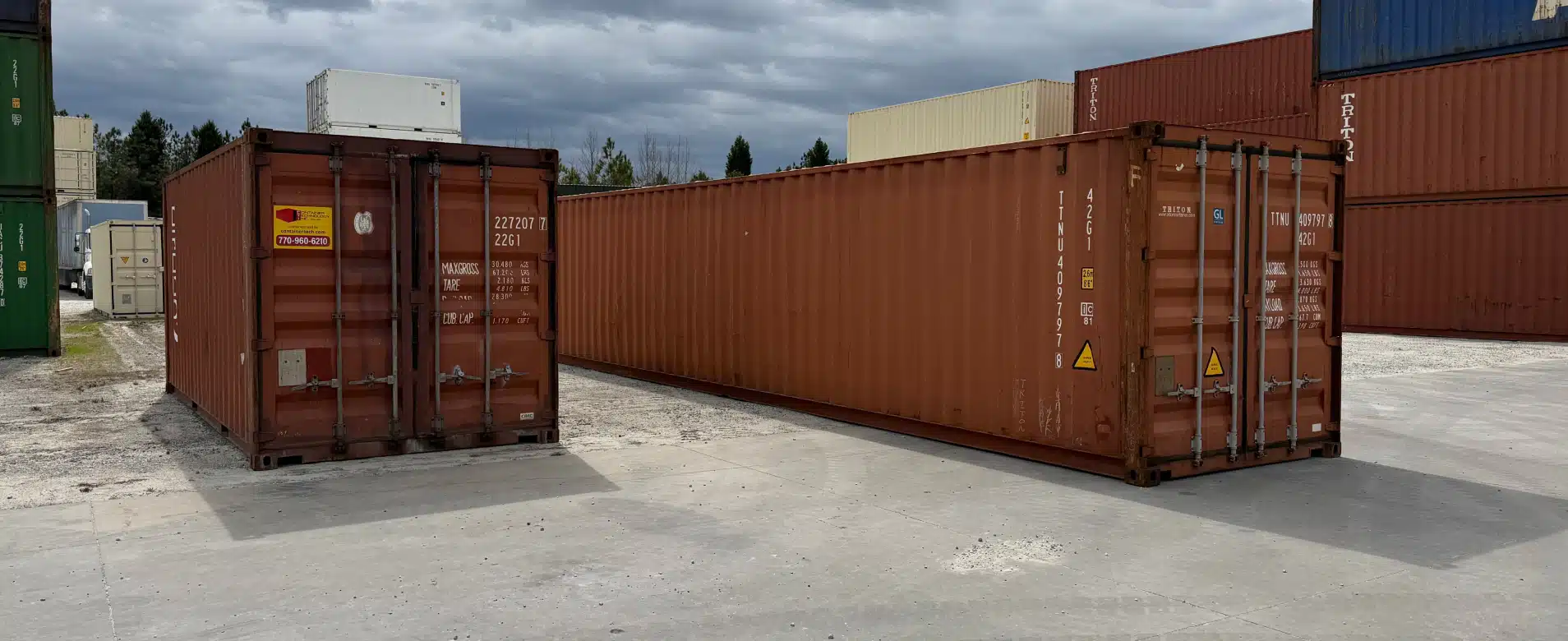
20ft vs 40ft Storage Containers: Sizing Guide for Businesses With Limited Space


When your business needs additional storage but your property has limited space, choosing the right container size becomes critical. While portable storage containers are known for their versatility and convenience, selecting between a 20-foot and a 40-foot unit can be a tough decision.
Both options offer durability, security, and flexibility. However, the right choice depends on your available footprint, access points, operational needs, and long-term growth plans. In this guide, we’ll break down the key differences between 20ft and 40ft storage containers to help your business make the most efficient use of limited space.
Understanding Standard Container Dimensions
Before comparing the two, it’s important to understand what “20 feet” and “40 feet” really mean in practical terms.
Standard storage containers are typically:
- 8’ wide
- 8’6” tall
- Available in either 20’ or 40’ lengths
Here’s a quick comparison:
20ft Storage Container
- Exterior Length: 20’
- Exterior Width: 8’
- Exterior Height: 8’6”
- Approximate Storage Capacity: 1,165 cu ft
40ft Storage Container
- Exterior Length: 40’
- Exterior Width: 8’
- Exterior Height: 8’6”
- Approximate Storage Capacity: 2,350 cu ft
The 40ft container essentially doubles the interior capacity of the 20-foot model while maintaining the same width and height.
Now, let’s look at how that impacts businesses working with limited space.
When a 20ft Container Makes More Sense
For businesses with tight layouts or smaller lots, a 20ft storage container is often the most practical option.
- Limited Yard or Parking Space
If your facility has restricted outdoor space, such as a small warehouse yard, a retail backlot, or a compact construction site, a 20ft container offers a manageable footprint. At 20 feet long, it fits more comfortably into narrow or irregular areas without overwhelming your property.
This makes it a strong option for:
- Urban businesses
- Small distribution centers
- Contractors working on confined job sites
- Schools, churches, or municipal properties with limited storage zones
- Easier Placement and Maneuverability
A 20ft container is generally easier to deliver and position. If your site has tight turns, limited driveway access, or surrounding structures that restrict maneuvering, the shorter length provides enhanced flexibility during delivery and placement.
For businesses operating in dense metropolitan areas around Atlanta, this can make a significant difference.
- Moderate Storage Needs
If your business needs storage for tools, equipment, excess inventory, or seasonal items, but not bulk pallet loads, a 20ft unit may provide more than enough capacity.
Many users underestimate how much fits inside a 20ft container. With proper organization, such as shelving or racking systems, it can store:
- Construction equipment
- Retail overflow inventory
- Landscaping tools
- Event materials
- Records and archived documents
When space is limited, maximizing vertical organization inside a 20ft container often eliminates the need for a larger unit.
- Lower Upfront Investment
While both sizes are cost-effective compared to expanding a facility, a 20ft container typically requires a lower initial investment. For small businesses or companies testing on-site storage for the first time, this can be an appealing entry point.
When a 40ft Container is the Better Fit
Even in space-conscious environments, a 40ft container can sometimes be the smarter long-term solution.
- Higher Volume, Same Width
One of the biggest advantages of a 40ft container is that it does not require additional width, only additional length. If your site can accommodate the larger container, you gain double the storage capacity without increasing the container’s footprint width.
For properties with long, narrow placement areas, this can be ideal.
- Bulk Inventory Storage
If your business manages high inventory turnover or stores palletized goods, a 40ft container provides significantly more flexibility for layout. You can create aisles, dedicated sections, or organized zones without overcrowding the space.
Industries that often benefit include:
- E-commerce fulfillment
- Wholesale distributors
- Manufacturing operations
- Restoration and disaster recovery services
- Long-Term Growth Planning
Many businesses choose a 20ft container initially, only to outgrow it within a year. If your operations are expanding, investing in a 40ft container from the start may prevent the need to add a second unit later. Two 20ft containers require more separation space and access clearance than one 40ft container placed strategically.
- Cost Efficiency per Cubic Foot
While a 40ft container costs more overall, the price per cubic foot of storage is often lower than that of a 20ft unit. If you have the room to accommodate it, this can provide greater long-term value.
Space Planning Considerations for Small Properties
When working with limited space, size alone isn’t the only factor to consider. Proper planning ensures you choose the right container and avoid placement issues.
Access Clearance
Beyond the container’s footprint, you’ll need additional clearance for:
- Room for doors to fully open
- Space for forklift or pallet jack access
- Delivery truck access during drop-off
For example, a 40ft container requires a longer delivery path, while a 20ft unit may be easier to position in tighter environments.
Zoning and Property Regulations
Before installation, check local zoning requirements or property management guidelines. Some commercial properties have restrictions on container size, placement, or visibility.
Ground Preparation
Both 20ft and 40ft containers require stable, level ground. Ensure your site can properly support the unit without shifting.
Comparing 20ft vs 40ft at a Glance
| Feature | 20ft Container | 40ft Container |
| Length | 20ft | 40ft |
| Width | 8ft | 8ft |
| Height | 8ft 6 in (standard) | 8ft 6 in (standard) |
| Storage capacity | 1,165 cu. ft. | 2,350 cu. ft. |
| Best For | Tight spaces, moderate storage | Bulk storage, growing businesses |
| Maneuverability | Easier | Requires more placement room |
| Cost per cubic foot | Higher | Lower |
Can Modifications Impact Your Decision?
Yes. Custom modifications can influence which size makes more sense for your operation.
For example:
- Adding shelving reduces usable width slightly.
- Installing roll-up doors may improve access in narrow areas.
- Interior partitions divide space into functional zones.
If your business plans to modify the container for office use, climate control, or specialty storage, factoring those adjustments into your size decision is essential. In some cases, a 40-foot container may offer better flexibility for modifications without sacrificing usable storage space.
Which Container is Right for Your Business?
For businesses with limited space, the decision often comes down to one key question: Do you need more length or more efficiency within a smaller footprint?
Choose a 20-foot container if:
- Your placement area is tight or irregular
- You have moderate storage needs
- Delivery access is restricted
- You want a lower upfront investment
Choose a 40-foot container if:
- You can accommodate a 40-foot straight placement
- You store bulk or palletized inventory
- You anticipate growth
- You want greater cost efficiency per cubic foot
With careful planning, either size can deliver secure, convenient, and flexible onsite storage.
Find the Right Fit for Your Property
Selecting between a 20ft and 40ft container doesn’t have to be complicated. The key is evaluating your available space, storage volume, and long-term operational needs.
At Container Technology, we’ve helped businesses find Atlanta storage containers for sale that work within even the most space-restricted properties. Whether you need a compact 20ft container or the expanded capacity of a 40ft unit, our team can help you determine the ideal fit. Request a free quote online or call us today to discuss your space constraints and storage goals!