What’s the Difference Between Reefers and Insulated Containers?


Choosing the right type of container is critical for businesses that handle temperature-sensitive goods. Whether you’re storing food, pharmaceuticals, agricultural products, or specialty materials, maintaining temperature stability can directly impact product quality, safety, and compliance. Two common options often considered are refrigerated containers (commonly known as reefers) and insulated containers.
These containers may initially look similar, as both are designed to help protect goods from temperature fluctuations and are widely used across logistics, food service, and industrial sectors. However, their functionality, use cases, and long-term value differ significantly. Understanding these differences is essential for selecting the right solution for your business.
This article breaks down how reefers and insulated containers work, where each excels, and how to determine which option best fits your operational needs.
Understanding Refrigerated Containers
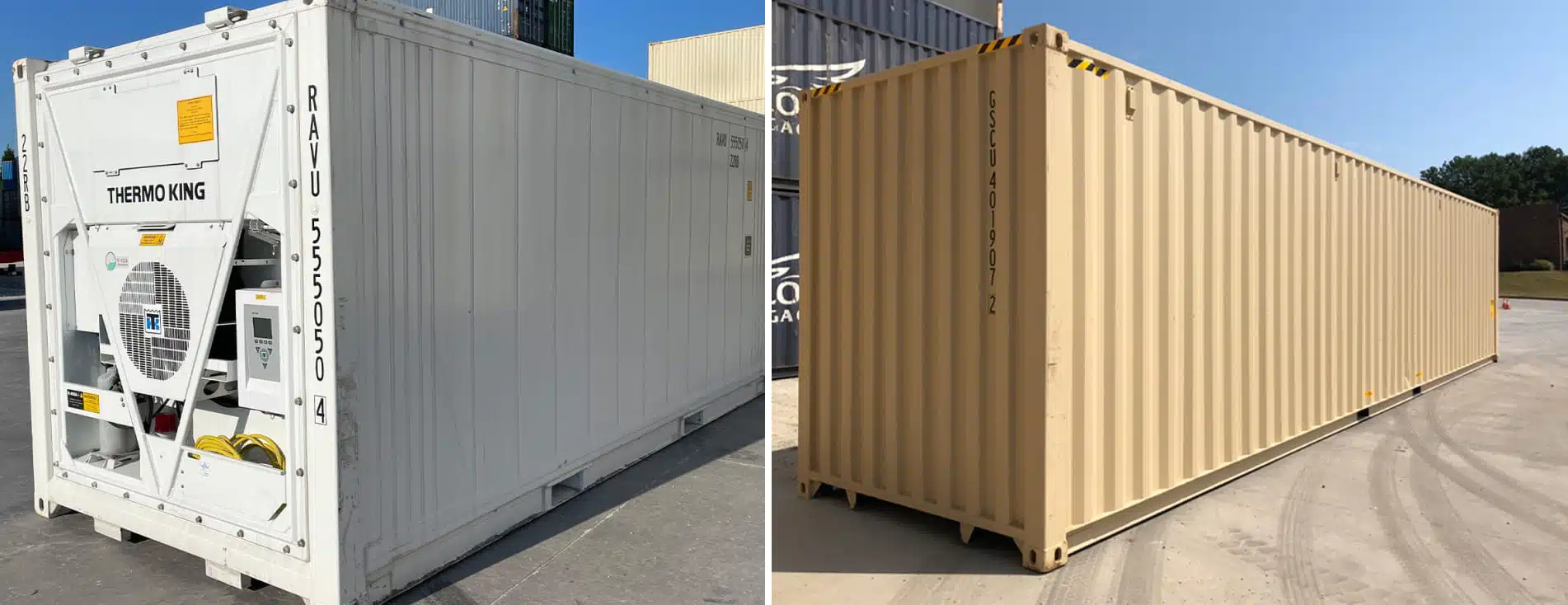
Refrigerated containers, or reefers, are active cold storage units designed to maintain precise internal temperatures regardless of outside conditions. These containers are equipped with built-in refrigeration systems that allow businesses to control and adjust temperatures as needed.
How Reefers Work
Reefers rely on an integrated electric refrigeration unit powered by either 230V 3-phase or 460V 3-phase power. Once connected to a compatible power source, the unit actively cools or freezes the interior to a set temperature. Most reefers can maintain temperatures ranging from below 0°F up to approximately 85°F, making them suitable for both frozen and chilled storage.
Because reefers actively regulate temperature, they play a critical role in maintaining cold chain integrity, especially when products are stored for extended periods or exposed to varying environmental conditions.
Common Features of Refrigerated Containers
Reefers are built for cold storage and typically include features such as:
- Aluminum t-rail flooring for airflow and durability
- Lockable double doors at one end
- Stainless steel interiors for sanitation and easy cleaning
- Integrated refrigeration units with digital temperature controls
These features make reefers reliable and compliant with many industry standards for food and pharmaceutical storage.
Typical Uses for Reefers
Because of their precise temperature control, refrigerated containers are widely used for:
- Perishable food storage for restaurants, grocery stores, and catering companies
- Cold storage at distribution centers and warehouses
- Temporary refrigeration for events, festivals, and seasonal operations
- Backup cold storage during facility maintenance or equipment failure
Advantages of Refrigerated Containers
Reefers offer several key advantages for businesses that need dependable cold storage:
- Precise temperature control: Ideal for products with strict temperature requirements
- Plug-and-play functionality: Once delivered and powered, they’re ready for immediate use
- Flexibility: Can function as refrigerators or freezers depending on settings
- Portability: Easily relocated as business needs change
For businesses requiring consistent, long-term refrigeration or freezing, reefers are often the most dependable solution.
Understanding Insulated Containers
Insulated containers, sometimes referred to as “non-working” cold storage containers, serve a different purpose. While they share similar construction and insulation properties with refrigerated containers, they do not include an active cooling system.
How Insulated Containers Work
Instead of actively cooling their contents, insulated containers are designed to maintain existing temperatures for a limited time. The insulation slows heat transfer between the interior and exterior, helping keep goods cold or cool if they are already at the desired temperature when loaded.
Because there is no refrigeration unit, insulated containers do not require external power. This makes them simpler to operate but also limits their effectiveness over longer durations or in extreme temperatures.
Common Features of Insulated Containers
Insulated containers typically include:
- High-quality insulation similar to refrigerated containers
- Steel or aluminum construction
- Lockable double doors
- Inoperable refrigeration system
Insulated (or non-working refrigerated) containers were once utilized as working units in shipping service. When they come out of service, the refrigeration system is no longer operational. However, you still get the benefits of the insulated structure.
Typical Uses for Insulated Containers
Insulated containers are commonly used for:
- Furniture or document storage
- Transporting non-perishable food and beverage products
- Electronics and equipment storage
- Temporary temperature buffering during transit or staging
Advantages of Insulated Containers
Insulated containers offer practical benefits for specific scenarios:
- Cost-effective: No refrigeration unit or power requirements
- Simple operation: No mechanical systems to maintain
- Energy-efficient: No electricity usage
- Temperature buffering: Better protection than standard shipping containers
These containers are best suited for short-term storage or transport where maintaining temperature is the primary goal, as opposed to controlling the temperature.
Key Differences Between Reefers and Insulated Containers
While reefers and insulated containers may appear similar, their differences have a significant impact on performance and suitability.
Temperature Control
- Reefers: Actively control and maintain precise temperatures
- Insulated containers: Passively slow temperature change, but cannot cool contents
Power Requirements
- Reefers: Require a compatible power source to operate
- Insulated containers: Require no power
Product Sensitivity
- Reefers: Ideal for highly temperature-sensitive goods
- Insulated containers: Suitable for products that tolerate limited temperature variation
Choosing the Right Option for Your Business
Selecting between a refrigerated container and an insulated container depends on your specific operational requirements. Key factors to consider include:
- Temperature sensitivity of your products
- Length of storage or transport time
- Availability of electrical power
- Budget constraints
- Need for mobility or temporary deployment
For businesses that handle frozen or highly perishable goods, refrigerated containers provide the control and reliability needed to protect inventory. For operations requiring short-term temperature stability without ongoing power costs, insulated containers may offer a practical alternative.
Matching Your Container to Your Goals
Understanding the difference between reefers and insulated containers is essential for maintaining product quality and operational efficiency. While both play valuable roles in temperature-sensitive storage and transport, they serve fundamentally different purposes.
Refrigerated containers deliver active, precise temperature control for long-term or high-risk applications. Insulated containers, on the other hand, provide passive protection for short-term or less demanding scenarios.
Purchase Your Unit from Container Technology
For businesses exploring cold storage options, working with an experienced container provider can help ensure you select the right solution for your needs. Container Technology has been supplying high-quality new and used containers since 1988, offering a wide range of cold storage options to support diverse industries across Atlanta and beyond.
Whether your operation requires full refrigeration or simple insulation, choosing the right container can make all the difference in protecting your products and your bottom line. Request a free quote online or call us today to get started!