
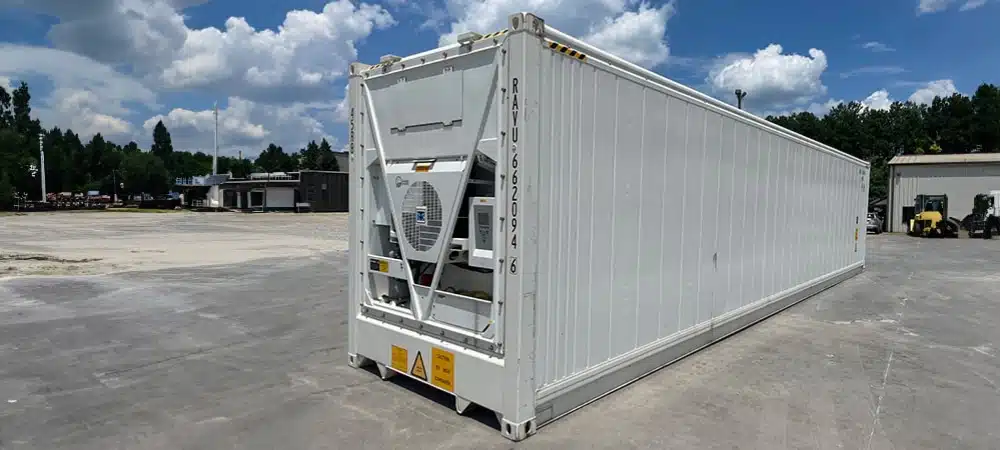
Refrigerated Container Size Guide


When your team needs cold storage, having the right solution for your business makes all the difference. Refrigerated storage containers, which are often referred to as reefers, provide a reliable, versatile way to store temperature-sensitive products. Whether you’re in food and beverage, pharmaceuticals, packaging, processing, or any other industry that relies on controlled environments, choosing the right container size is one of the most important decisions you’ll make to improve your business operations.
This guide breaks down the key refrigerated container sizes available—20ft and 40ft—and explores how each option can support different storage needs.
Why Refrigerated Storage Containers?
Before diving into sizing, let’s explore why many businesses across industries choose refrigerated containers for their cold storage requirements. Unlike permanent cold storage facilities, reefers are portable, flexible, and can be placed exactly where they’re needed—on-site, at a warehouse, or at a distribution hub.
They are built from durable steel and come equipped with insulated walls and advanced refrigeration units that can maintain a wide range of temperatures, from refrigeration to deep freeze. This flexibility makes them ideal for both short-term projects and long-term operations.
20ft Refrigerated Containers
A 20ft refrigerated container provides a more compact option, offering cold storage that combines simplified mobility with impressive capacity. With an internal length of around 17ft and a width just under 8ft, it provides approximately 1,000 to 1,100 cubic feet of space, depending on the specific unit. For many use cases, this is ample storage space to accommodate a business’s needs.
Best Uses
- Small to Medium Businesses: Ideal for restaurants, small food distributors, or catering companies that don’t require massive storage.
- Seasonal Needs: A great choice for businesses with temporary surges in demand, such as holiday seasons or event-driven inventory increases at different points in the year.
- Tight Spaces: If you’re working in a location where space is limited, the smaller footprint of a 20ft container can be an advantage, providing convenience to your operations.
Walk-In Coolers and Freezers
Some 20ft units are designed specifically as walk-in coolers or freezers. These are particularly useful for businesses that need employees to access the container frequently throughout the day. Instead of stacking pallets, items can be organized on shelving for quick, convenient access. These units provide easy access for authorized personnel through a single door with a strip curtain, maintaining the temperature while creating a convenient entry point.
40ft Refrigerated Containers
For businesses that require a larger capacity, 40ft refrigerated containers are the optimal solution. These units provide nearly double the space of their 20ft counterparts, with interior dimensions of about 37ft long and up to 2,200 to 2,400 cubic feet of storage capacity.
Best Uses
- Large-Scale Distribution: Perfect for grocery chains, food processors, or wholesalers managing high inventory volumes.
- Centralized Storage: Useful for regional hubs or warehouses that need to store large quantities of perishable goods before shipment.
- Cost Efficiency: Despite being larger, a 40ft container can often be more cost-effective per cubic foot compared to multiple 20ft containers.
40ft Refrigerated Trailers
A 40ft refrigerated trailer is a mobile solution that combines the storage benefits of a reefer with the flexibility of easy transport. These trailers are particularly useful for logistics operations, festivals, or any business that needs to relocate cold storage frequently.
40ft Insulated Containers
For applications where maintaining a consistent temperature is important but active refrigeration isn’t required, insulated containers provide an affordable alternative. They are built with the same durable construction and insulation but without a cooling unit, making them suitable for products that simply need protection from temperature fluctuations.
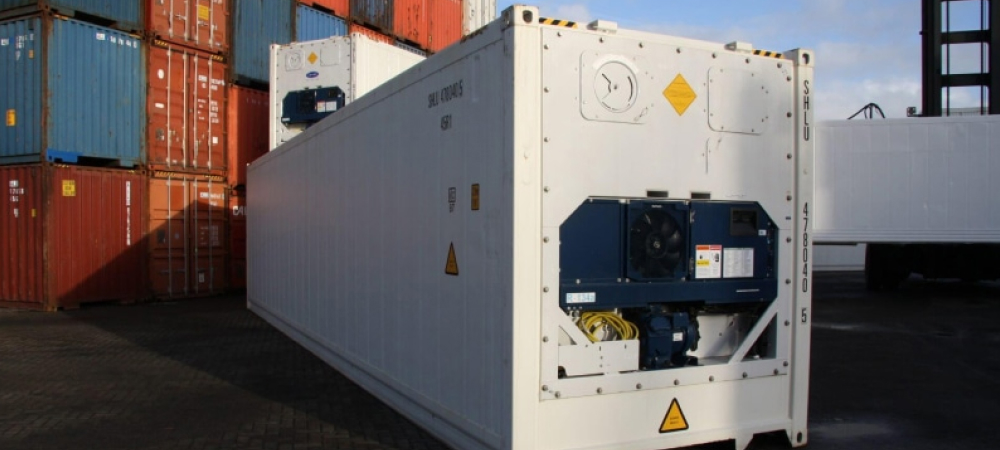
Choosing the Right Container Size
Selecting between a 20ft and 40ft refrigerated container comes down to balancing capacity with space availability, operational needs, and how frequently you’ll access the unit.
As you mull over the decision, here are a few questions to help you tackle this choice confidently:
- What volume of goods do you need to store? Smaller inventories or short-term projects often fit best in 20ft units, while large-scale operations benefit from 40ft containers to maximize their space.
- How much space is available on-site? Limited space on-site may make a 20ft container the practical choice, helping you to avoid any difficulties delivering your container.
- Do employees need frequent access? Walk-in coolers and freezers provide better usability for frequent entry, while standard reefers work well for palletized storage and simple shelving needs.
- Is mobility important? For operations that move locations often, a 40ft refrigerated trailer may provide the best balance of storage and flexibility. However, if mobility isn’t a priority, you may find that a different model works best for your business.
- Do you need active refrigeration? Insulated containers work well for products that don’t require constant cooling but need protection against external temperature swings. However, if you simply need to maintain temperatures with minimal fluctuation, an insulated container offers a more cost-effective option.
Industries That Benefit from Refrigerated Storage Containers
Refrigerated containers are used across a wide range of industries, providing versatile solutions that make refrigeration easy. A few common applications include:
- Food and Beverage: From restaurants to large distributors, refrigerated containers keep perishable goods fresh and safe.
- Pharmaceuticals: Medicines, vaccines, and other sensitive products require precise temperature control.
- Floral Industry: Flowers and plants stay fresh longer with temperature-regulated storage.
- Agriculture: Farmers and producers use reefers to store produce before it’s distributed to markets.
- Chemical: For companies that process chemicals or store chemicals, cold or temperature-controlled storage may be required.
Choose High-Quality Refrigerated Storage
Both 20ft and 40ft refrigerated containers offer dependable cold storage solutions for businesses of all sizes. The right choice depends on your specific storage needs, available space, and operational goals. Smaller operations often find the 20ft size ideal, while larger distributors or those requiring bulk storage turn to 40ft containers for efficiency.
If you’re considering refrigerated storage solutions, Container Technology offers a comprehensive selection of 20ft refrigerated containers, 20ft walk-in coolers and freezers, 40ft refrigerated containers, 40ft refrigerated trailers, and 40ft insulated containers. Since 1988, we have provided the highest quality units to businesses in Atlanta and beyond. Call us today or request a free quote online to find the best cold storage option for your business.