
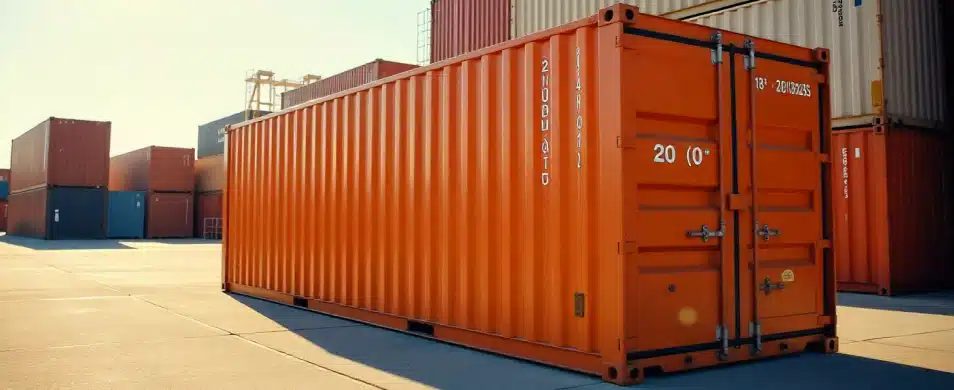
Storage Container Sizing: Complete Guide to Shipping Container Width, Length & Height


If you’re in the market for a shipping container, choosing the right size is essential. Whether you plan on using your container for storage, shipping, or mobile office space, understanding the dimensions and capacities of various container sizes can help you make the most cost-effective, functional choice for your storage needs.
In this guide, we’ll break down the most common container dimensions, including standard and high cube options, and highlight the best uses for each.
Why Considering Size is Important
Shipping containers are built to standardized dimensions, which is crucial for transportation and logistics needs. Although all containers have similar widths, their length and height can vary significantly, and these differences impact how much you can store, how the container can be transported, and what modifications are possible.
Standard Shipping Container Sizes
1. 10-Foot Standard Containers
External Dimensions:
- Length: 10 feet
- Width: 8 feet
- Height: 8 feet 6 inches
Internal Volume: Approx. 560 cubic feet
Best For:
- Small-scale storage
- Constrained job sites
- Personal or residential use
- Small businesses with limited inventory
Key Advantages:
- Compact and easy to place
- Fits in tighter spaces than larger units
- Often used for tool or document storage
2. 20-Foot Standard Containers
External Dimensions:
- Length: 20 feet
- Width: 8 feet
- Height: 8 feet 6 inches
Internal Volume: Approx. 1,170 cubic feet
Best For:
- Construction and residential storage
- Retail backstock
- General business inventory
- Modular building blocks
Key Advantages:
- Most commonly used size
- Easy to transport
- Cost-effective for mid-size storage needs
3. 40-Foot Standard Containers
External Dimensions:
- Length: 40 feet
- Width: 8 feet
- Height: 8 feet 6 inches
Internal Volume: Approx. 2,390 cubic feet
Best For:
- Large-scale storage
- Freight and logistics companies
- Agricultural equipment and rural storage
- Warehouse overflow and retail storage
Key Advantages:
- Provides double the space of a 20-foot container
- Ideal for businesses with high-volume storage needs
- Economical on a per-cubic-foot basis
High-Cube Container Sizes
High-cube containers offer an additional foot of height compared to standard containers. This extra vertical space helps you store bulky equipment or plan container modifications.
1. 40-Foot High Cube Containerw
External Dimensions:
- Length: 40 feet
- Width: 8 feet
- Height: 9 feet 6 inches
Internal Volume: Approx. 2,694 cubic feet
Best For:
- Warehousing with tall shelving
- Large equipment or machinery
- Container modifications for offices and workshops
Key Advantages:
- Extra headroom without increasing footprint
- Easier to stack or customize
- Excellent for climate-controlled or partitioned interior builds
2. 45-Foot High Cube Containers
External Dimensions:
- Length: 45 feet
- Width: 8 feet
- Height: 9 feet 6 inches
Internal Volume: Approx. 3,040 cubic feet
Best For:
- Oversized storage needs
- Logistics companies moving high volumes
- Mobile office projects with spacious interiors
Key Advantages:
- More interior length without sacrificing width
- Optimal for long items or high stacking
3. 53-Foot High Cube Containers
External Dimensions:
- Length: 53 feet
- Width: 8 feet 6 inches
- Height: 9 feet 6 inches
Internal Volume: Approx. 3,860 cubic feet
Best For:
- Long-haul freight operations
- On-site warehousing
- Industrial-scale storage
- Converted offices or retail units
Key Advantages:
- Maximum available space
- Offers more room than standard trailers
- Only suitable for land-based use (not ISO certified for sea transport)

Quick Reference Chart
| Container Size | External Dimensions (L×W×H) | Interior Volume | Standard or High Cube | Best Use Case |
| 10’ Standard | 10’ × 8’ × 8’6” | ~560 cu ft | Standard | Small storage, tight spaces |
| 20’ Standard | 20’ × 8’ × 8’6” | ~1,165 cu ft | Standard | Mid-size storage, general use |
| 40’ Standard | 40’ × 8’ × 8’6” | ~2,350 cu ft | Standard | Bulk storage, transportation |
| 40’ High Cube | 40’ × 8’ × 9’6” | ~2,694 cu ft | High Cube | Custom builds, tall items |
| 45’ High Cube | 45’ × 8’ × 9’6” | ~3,043 cu ft | High Cube | Mobile offices, extra length |
| 53’ High Cube | 53’ × 8’6” × 9’6” | ~3,857 cu ft | High Cube | Maximum space |
Choosing the Right Size for Your Storage Needs
Asking yourself the right questions can help you find the ideal container size to meet your storage needs. Find some of the best questions to ask your storage container provider below.
- What am I storing or transporting?
The type of items you plan to store or ship can make a big difference in your container choice. If you’re handling standard-sized boxes or smaller tools, a 20ft container may offer enough space. For large machinery, oversized parts, or palletized goods, you may need the extra space of a 40ft or 45ft unit.
- How much vertical space do I need?
A high cube container provides an extra foot of headroom for stacking boxes or installing shelving systems. This vertical space can also be helpful if you’re modifying the container for human use, like an office or workshop.
- Is portability important?
If the container needs to be moved frequently between job sites or loaded onto different transport vehicles, smaller sizes like the 10ft or 20ft standard containers are easier to relocate. They can be transported on a wider variety of trucks and placed in tighter areas.
- Am I modifying the container?
Containers used for offices, retail pop-ups, or workshops often need extra headroom, insulation, windows, HVAC systems, and electrical wiring. High-cube containers are typically better suited for these kinds of customizations because they provide more usable interior volume and flexibility.
- Do I have space on-site for delivery and access?
A 40-foot or 53-foot container might offer plenty of internal space but be sure your site can physically accommodate it. Consider not just the footprint, but also the delivery process—trucks need enough room to maneuver and drop the container safely.
- What is the total weight of the items I plan to store?
All containers have maximum payload capacities. For example, a 20ft container can typically hold heavier loads more efficiently due to its compact size and structural balance. Larger containers might be better for volume rather than extremely heavy items. Always check the payload limit if you’re storing dense, weighty materials.
- What’s my budget short-term and long-term?
While larger containers offer more space, they also come with higher upfront costs and potentially increased delivery fees. Consider your purchase price and the long-term value in terms of durability, ease of access, and future adaptability.
Find Your Perfect Shipping Containers in Atlanta
Finding your ideal Atlanta storage containers means matching your storage or project needs with the most effective container model. From compact 10ft units to massive 53ft high cubes, your business can find the perfect container to suit your needs.
Looking for a trusted storage container provider? Count on Container Technology Atlanta’s top shipping container provider since 1988. Our selection of new and used storage containers provides versatile size and budget options. Request a quote online or call us today to find the right unit for you!