

Storage Container Insulation Types: What’s Right for Your Business?


Insulating a storage container is a necessary step in creating a controlled environment, whether you need it for temperature-sensitive goods, workspace conditions, or moisture control. To achieve these results, two of the most widely used insulation options are spray foam and fiberglass batt.
Each of these options has distinct advantages and considerations that you should know before investing. This guide walks through these insulation types, their best use cases, and how to choose the right one for your business.
Foam Insulation
Spray foam insulation, particularly closed-cell spray foam, is widely regarded as an excellent option for insulating storage containers. This material is applied as a liquid that quickly expands into a dense, hardened foam, filling even the smallest gaps and adhering tightly to the container’s corrugated steel walls. This ability to seal the entire interior surface makes spray foam an effective barrier against air leaks, moisture intrusion, and thermal exchange.
One of the most noteworthy benefits of spray foam is its exceptional R-value, which measures thermal resistance. Closed-cell spray foam can offer R-values of approximately R-6 to R-7 per inch, which is significantly higher than most other insulation types. Because of this, it provides top-tier thermal performance in thin layers. In addition to superior thermal insulation, spray foam is water-resistant and reduces the risk of mold growth and corrosion, which can be problems in metal structures exposed to the elements.
Spray foam insulation is also efficient to install when done professionally. While the upfront cost of spray foam is higher, its long-term performance, durability, and airtight seal often justify the investment.
Best Applications for Foam Insulation
Spray foam insulation is ideal for projects that require high-performance thermal regulation, moisture protection, and long-term durability. One of the most common use cases is climate-sensitive storage. Containers used to store pharmaceuticals, chemicals, or temperature-sensitive equipment greatly benefit from foam insulation’s ability to maintain a consistent internal temperature. This is especially important in industries where product quality or compliance depends on strict temperature control.
Container offices and workspaces also benefit significantly from spray foam insulation. In regions with hot summers, cold winters, or high humidity, spray foam helps regulate indoor climate and keeps energy costs down by improving HVAC efficiency. Its moisture-resistance prevents condensation buildup on interior walls, reducing the risk of rust and structural damage over time.
For outdoor container installations in harsh or fluctuating weather conditions, spray foam’s tight seal allows for unmatched protection. Creating a stable environment within the container prevents damage or losses associated with moisture or extreme temperatures. Overall, spray foam is the ideal insulation solution for demanding environments where consistent performance, energy efficiency, and moisture control are essential.
Fiberglass Insulation
Fiberglass batt insulation is a staple in the construction of traditional buildings. Because this is such a reliable feature and is easy to handle for those familiar with basic construction techniques, fiberglass is another common option for container insulation. Fiberglass batt is typically installed between wooden studs that form a frame inside the container. It is relatively inexpensive and widely available, which makes it a convenient option for businesses with varying budgets. It also offers moderate thermal insulation, usually around R-3 to R-4 per inch.
Although fiberglass doesn’t provide the same airtight seal as spray foam, it serves as a strong choice for many projects, especially when budget is a concern or the container will be used in milder climates. Because it must remain dry to maintain its insulating properties, fiberglass is best used in well-ventilated or low-humidity settings. This practical, budget-friendly solution can meet the needs of many businesses across industries.
For many companies, one of the most attractive features of fiberglass insulation is its cost-effectiveness. These material costs are significantly lower than spray foam, and because the installation process is simpler, labor costs are considerably more affordable. Fiberglass is often chosen for container builds that don’t require maximum energy efficiency but still need a moderate level of insulation for basic protection.
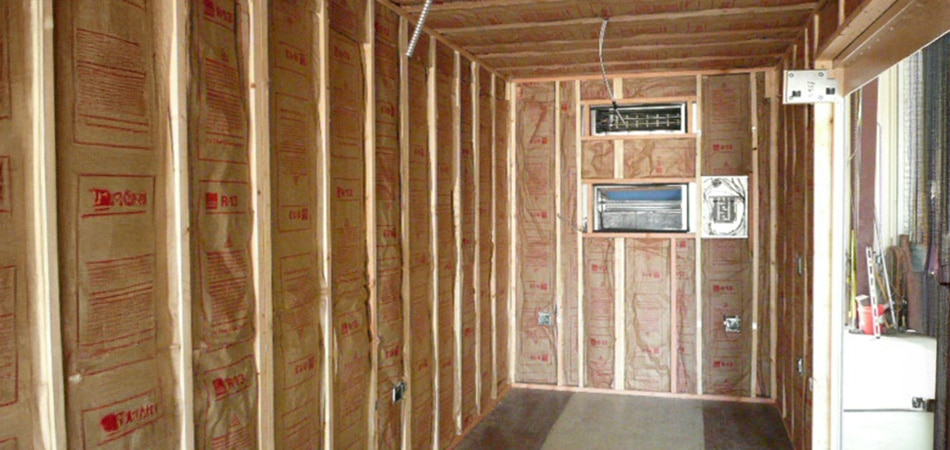
Best Applications for Fiberglass Insulation
Fiberglass insulation works well in projects with less demanding thermal requirements. For example, if your business is converting a container into an office or workshop, fiberglass can provide enough insulation to keep the space usable year-round without breaking the bank. It’s also a reliable choice for storage containers used in mild climates, where extreme heat or cold doesn’t present a significant issue.
Businesses that need to insulate multiple containers or complete a project on a tight budget may find fiberglass the most practical solution. While it may not offer the same performance or longevity as spray foam, fiberglass still provides trusted insulation for basic comfort and temperature moderation.
Another advantage is that fiberglass is DIY-friendly. Installing batt insulation is relatively straightforward for individuals with some construction experience, especially if the container is already framed with wooden studs. For small businesses looking to save on labor costs, fiberglass insulation can be a manageable project.
Fiberglass also works well with interior finish options such as FRP (Fiberglass Reinforced Plastic) panels. These panels provide a clean, durable, and moisture-resistant wall finish that can be easily cleaned and sanitized.
Insulate Your Container Appropriately with Container Tech
No matter which type of insulation you choose, these options provide reliable ways to meet your business’s specific needs. Insulating your container appropriately ensures it performs effectively throughout the year for your desired commercial applications.
Looking for a trusted container supplier to buy from? Trust Container Technology, the trusted source of containers in Atlanta and beyond. Our comprehensive selection of new and used containers, along with a complete range of modifications, empowers your business to find the perfect unit for your needs.
Request a free quote online or call us today to learn more about our options!